
Early history of Bottesford Railway Station
The 'Ambergate Railway' and 'Bottesford for Belvoir'
Neil Fortey
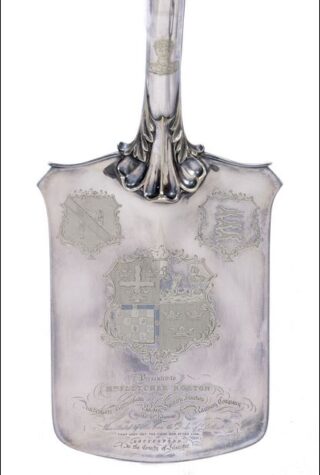
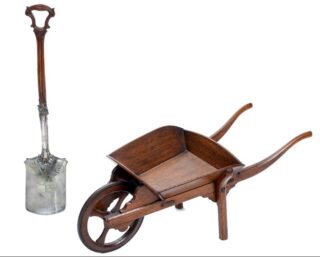
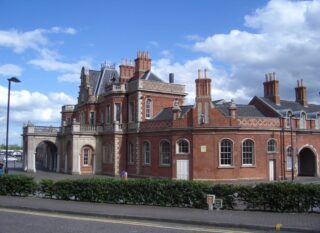
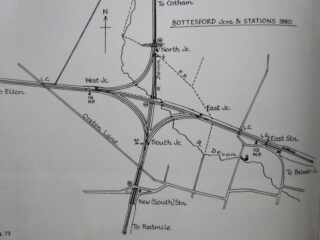
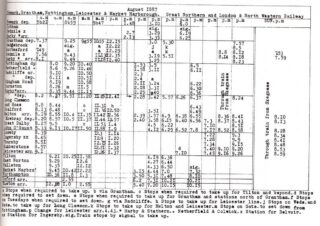
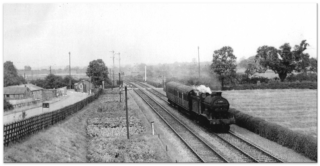
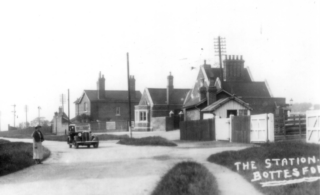
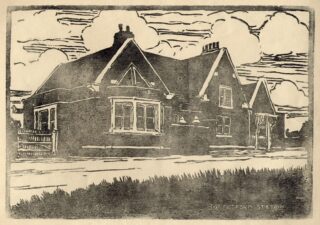
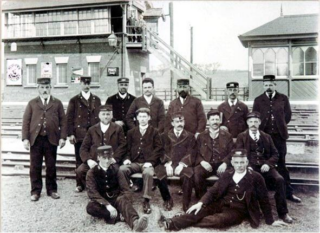
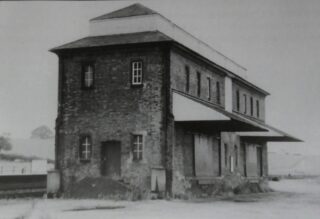
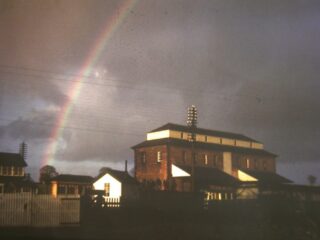
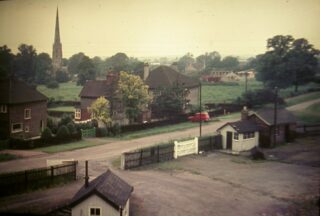
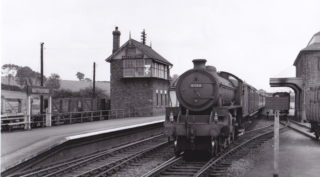
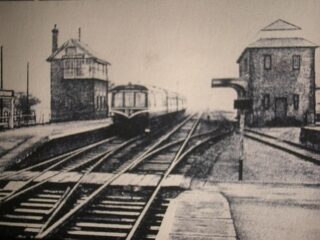
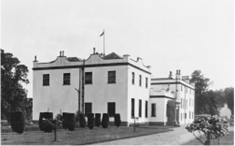
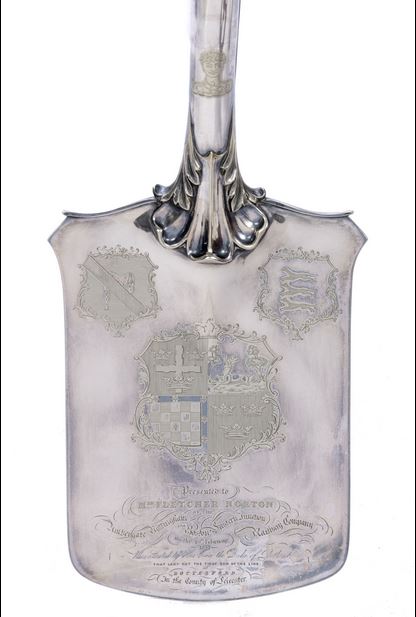
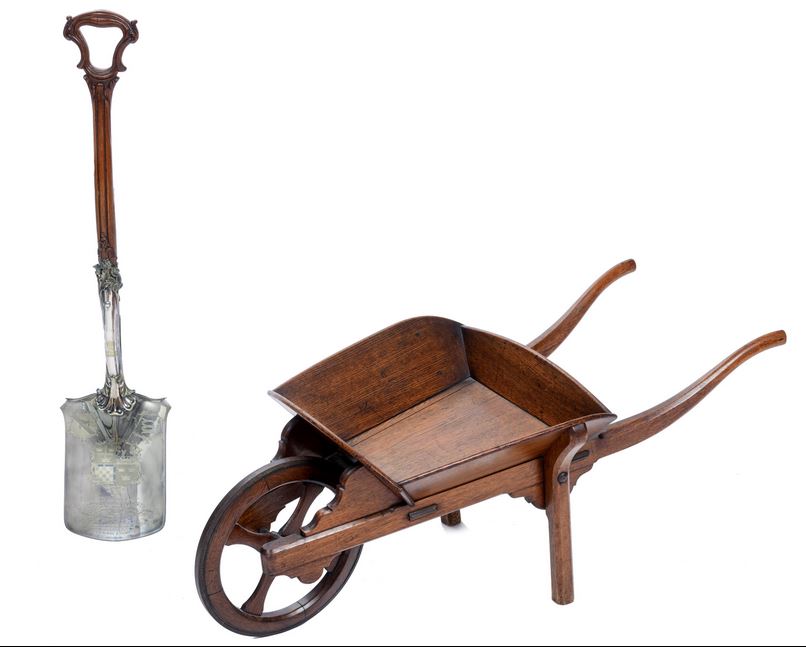
Based on a talk ‘Bottesford for Belvoir‘ given at Bottesford Local History Society, May 13th 2025. This grew out of preparation for a Station History platform display by members of Bottesford’s group of East Midland Railway Station Adopters who created and maintain the Bottesford Friendly Garden in part of the former goods yard at Bottesford Station. It was one of the Station Adopters, Mr Herbert Daybell, that orignally drew attention to the Ceremonial silver shovel and wooden wheelbarrow from the “turning of the first sod” Ceremony of the Nottingham to Grantham railway in February 1847.
The Railways Revolution
Construction of Britain’s Victorian railway network can be seen as a revolution, following earlier revolutions in agriculture, development of turnpikes and canals, manufacturing and mining, the steam engine and a host of other inventions. Great Britain prided itself on being “the World’s Workshop”, but it needed a much faster and efficient transport system to distribute goods and raw materials, especially coal, if it was to continue. People needed a more rapid and affordable means to travel from place to place than the horse and carriage. There was a lot of money waiting to be invested. The railway promised safe returns from investment in the country’s progress towards a bright future.
Many had been opposed to the new means of transport, some for aesthetic and nostalgic reasons, others because of the upheaval of the old, well-ordered society.
“A man born in 1800 would have grown up in a pre-railway world that was nearer to medieval England than it is to our own. He would have seen the railway invade it and suck its life away into the growing manufacturing towns.” (A quotation given in Michael Freeman, p.35).
The Duke of Wellington opposed railways “because they would encourage the lower classes to move about.” John Bull was hostile (as quoted in British Railways, Arthur Elton, 1947): “Does anybody mean to say that decent people, passengers who would use their own carriages … would consent to be hurried along through the air upon a railroad …; or is it to be imagined that woman … would endure the fatigue, and misery, and danger … of being dragged through the air at the rate of twenty miles an hour, all their lives being at the mercy of a tin pipe, or a copper boiler, or the accidental dropping of a pebble on the line of way? We denounce the mania as destructive of the country in a thousand particulars – the whole face of the Kingdom is to be tattooed with theses odious deformities – huge mounds are to intersect our beautiful valleys; the noise and stench of locomotive steam engines are to disturb the quietude of the peasant, the farmer and the gentleman …. Railroads … will in their efforts to gain ground do incalculable mischief. If they succeed they will give an unnatural impetus to society, destroy all the relations which exist between man and man, overthrow all mercantile regulations, overturn the metropolitan markets, drain the provinces of all their resources, and create, at the peril of life, all sorts of confusion and distress”.
Yet, as Arthur Elton put it, ”the opposition could not stop the railways; it could only delay them. Public need and public demand were too great to be put off”. Construction of the railway was a revolution, following earlier ‘revolutions’ in agriculture, development of turnpikes and canals, manufacturing and mining, the steam engine and a host of other inventions. Great Britain prided itself on being “the World’s Workshop”, but it needed of a much faster and efficient transport system to deliver goods and raw materials, especially coal, if it was to continue.
This year, 2025, marks the Bicentenary of the 1825 opening of the Stockton and Darlington Railway, the first passenger railway in Britain, where coal from Tanfield was hauled to the wharfs at Stockton by Robert Stephenson’s revolutionary steam locomotive. The Liverpool-Manchester Railway opened in 1830 after the Rainhill locomotoive competition of 1829, heralding a decade of major new routes. The 112 mile London-Birmingham Railway opened in 1838, “the greatest public work ever executed either in ancient or modern times“. Brunel’s Great Western completed its London to Bristol route in 1841. These heroic successes stimulated a huge surge of speculative investment, the “Railway Mania”, which reached its height in 1845 when, according to Michael Freeman, 16 new railway companies were registered in January, 30 in February and more than 50 in March. The Manchester Guardian reported that 357 projected railways with an aggregate capital of £332 millions had been advertised in one month alone.
Each new line needed a Parliamentary Bill setting out what was planned which required authorisation before it could go ahead. Authorisation brought the power to acquire land for the new line, compulsory purchase on a vast scale, at prices negotiated with often hostile landowners. Vast sums were spent steering railway Bills through Parliament and, increasingly, on territorial disputes between rival companies. Landowners made fortunes by forcing up the price of land they were obliged to sell. The railway companies built up land holdings that snaked and criss-crossed across cities and countryside.
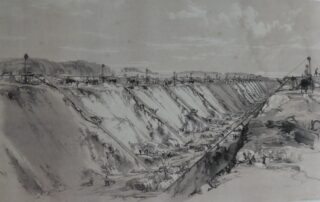
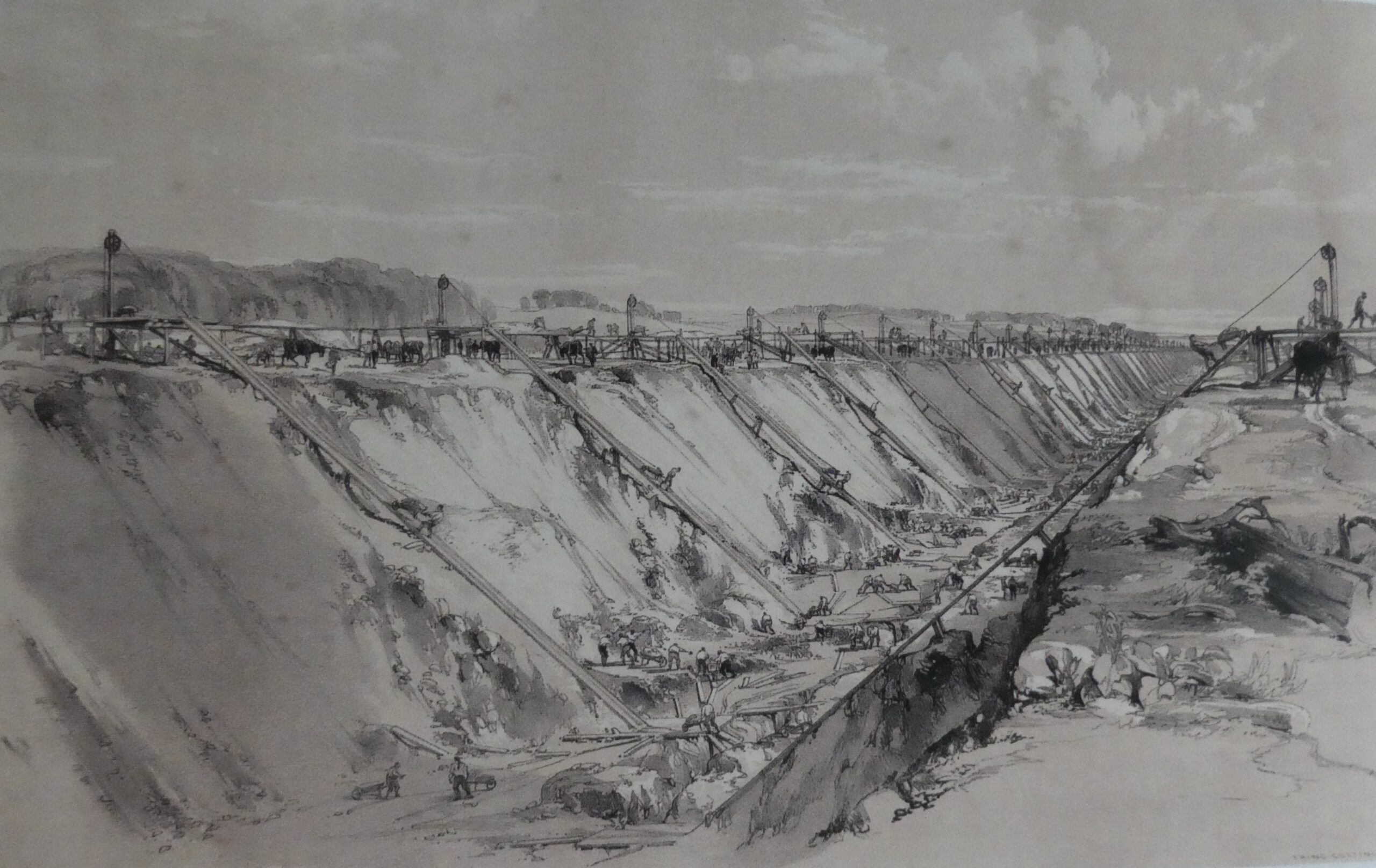
By 1845 the network had grown to some 2,200 miles of line: by 1852 this had increased to 6,600 miles, implying an average of 630 new miles of railway each year, similar to the distance from London to John O’Groats or one to two miles of new track every day, all built by the armies of labourers known as “navvies” aided by horses and gunpowder, year after year, laying rails and sleepers after building the line itself, its cuttings, embankments, tunnels and bridges. Vast numbers of navvies were employed, more than all the armed forces, costing more in wages, a fete that we can hardly imagine today.
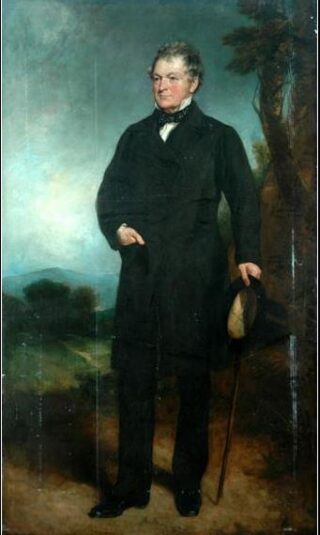
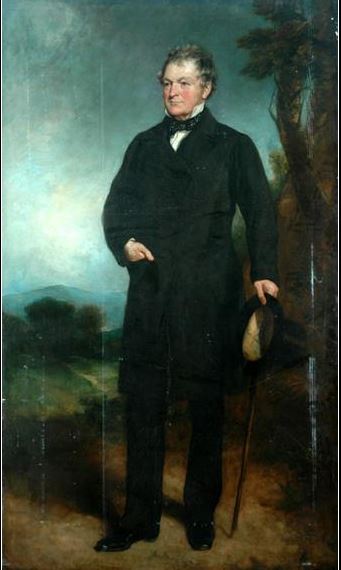
While the number of railway companies and lines under construction mushroomed, there was also a trend towards amalgamation of railway companies to create regionally based networks. The Midland Railway (MR), formed in 1844 and led by Sir George Hudson “the Napoleon of the railway”, “the Railway King”, created a network which spread across the coal rich parts of the Midlands and Yorkshire and beyond. The London & North-Western Railway (LNWR) incorporated in 1846 would extend the London-Birmingham into the Northwest and Scotland. Neither welcomed competition from a direct eastern route from London to Yorkshire, Newcastle and Edinburgh, but this was precisely the goal of the Great Northern Railway (or GNR), also incorporated in 1846. The GNR aimed to undercut freight charges and extend its network into the coalfields of the East Midlands and Yorkshire. Its direct route to York via Peterborough and Doncaster was bitterly fought in Parliament. In 1845 Edmund Beckett, chairman of the GNR, publicly dismissed George Hudson as “a blackguard” on Derby station, as reported in Punch. The GNR was also opposed by the Board of Trade, whose petition alleged that its list of subscribers was false. This was rejected and the GNR’s Bill passed through Parliament in 1846 having cost over £600,000 in legal fees, “the most expensive parliamentary contest in British railway history”. Hudson was defeated but the dispute rumbled on and went to arbitration under W.E. Gladstone, then MP for Newark, who finally ruled in favour of the GNR proposal.
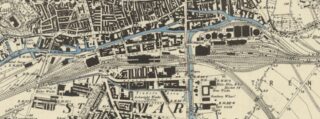
As construction of the GNR advanced northwards towards Doncaster the MR tried to pre-empt it by building eastwards from Nottingham to Lincoln, cutting across the GNR route at Newark. The 39-mile line Nottingham-Lincoln route was completed in just 8 months and opened in August 1846 on a day of heavy rainfall. On the following day, subsidence of the line caused a disrailment at Gonalston and the death of the fireman. Nevertheless, the Lincoln line ran successfully from the Midland Railway’s new Nottingham station on Carrington Street, which opened in 1848 to cater for the through trains. This station, which replaced its original 1839 terminus, is still in use today. However, the Lincoln line failed to frustrate the Great Northern, whose route through Grantham and Newark to Doncaster was completed and opened in 1852. To this day, the former MR and GNR lines cross one another via the Newark Flat Crossing north of Newark Northgate Station.
Birth of the Ambergate Railway
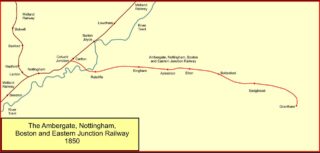
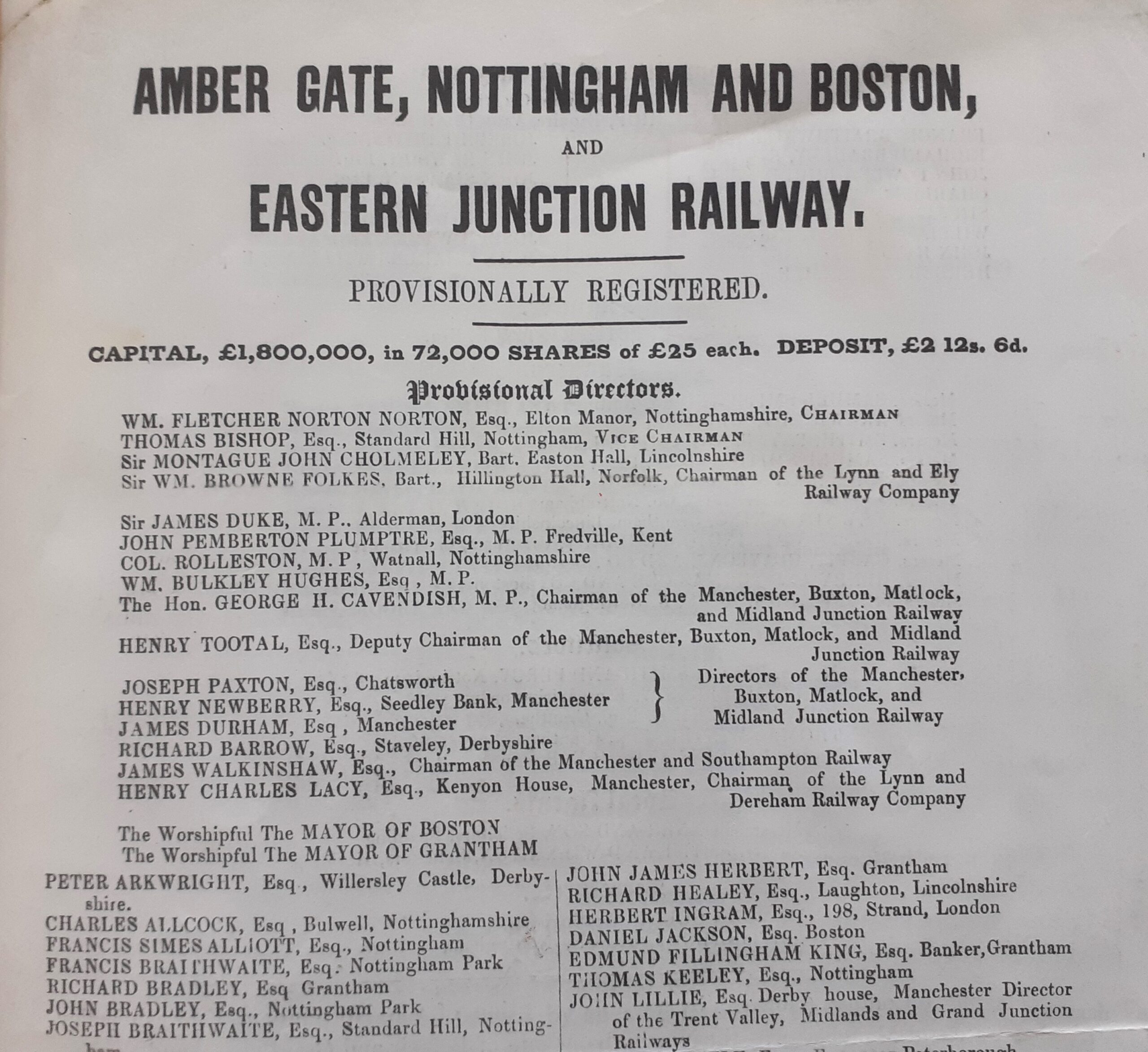
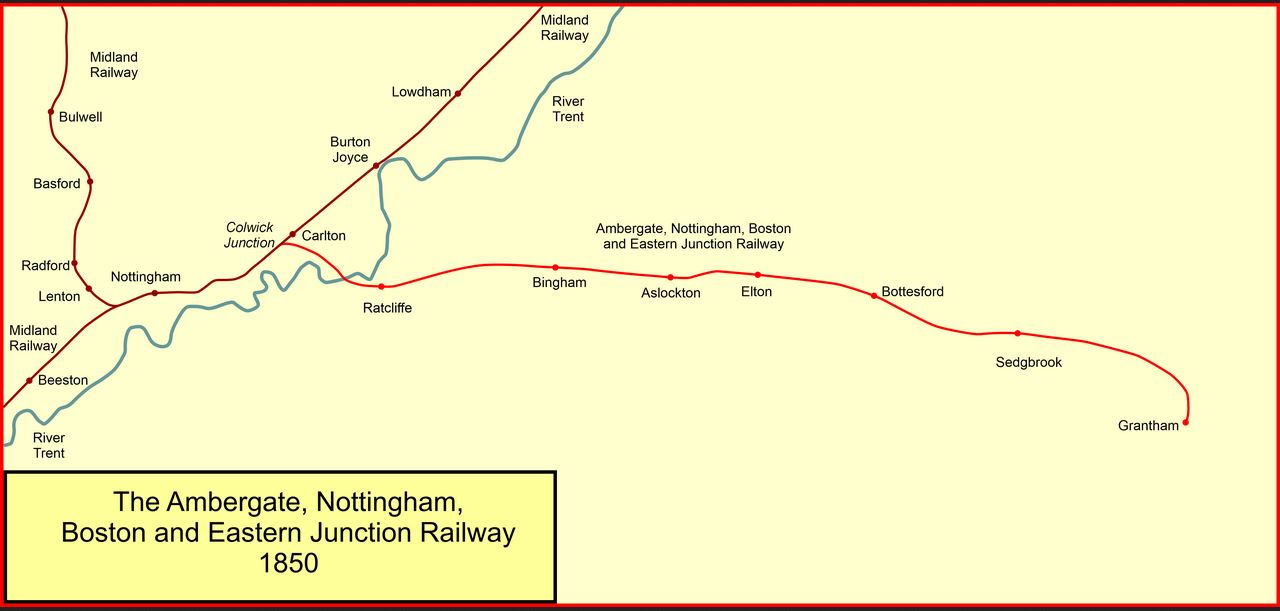
There had been a proposal in 1838 to link industrial Lancashire to the agricultural East of England by means of a railway from Manchester via Nottingham and Grantham to Spalding, with branches to Boston and Sleaford. This would have run through a tunnel beneath the heathlands east of Grantham. The concept was revived in 1845 by the Ambergate, Nottingham, Boston and Eastern Junction Railway, generally known as the Ambergate company or railway. The revised route to the East Coast at Boston ran from Ambergate itself, where it would connect with the Derby-Manchester route, then passed through Nottingham, Grantham and Sleaford. It won the support of Nottingham Council from among no less than 35 rival schemes.
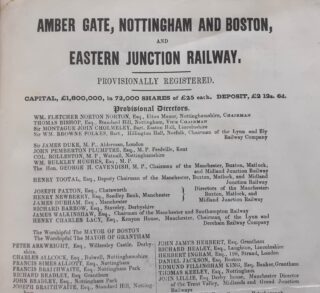
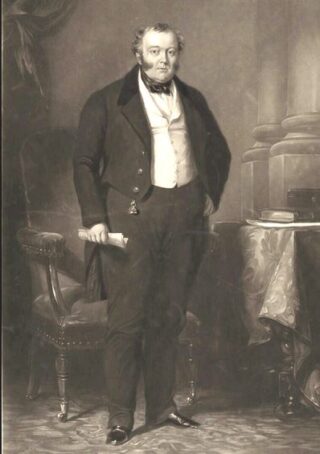
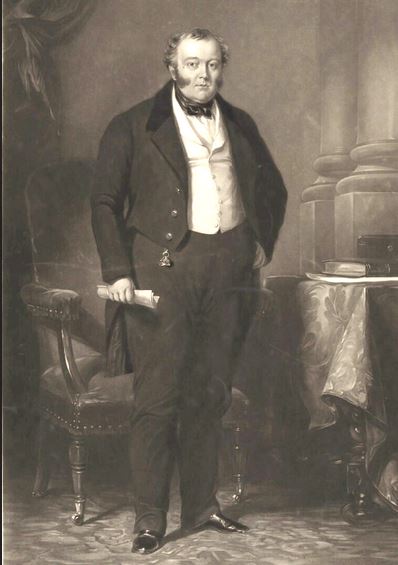
The chairman of the ‘Ambergate Company’ was William Fletcher Norton Norton of Elton Hall, near Bottesford. The board included the chairmen of the Lynn and Ely Railway, the Lynn and Dereham Railway and of the Manchester and Southampton Railway, plus a representative of the Trent Valley, Midlands and Grand Junction Railway. There was also Peter Arkwright, son of Sir Richard Arkwright, manager of the family’s mills at Cromford, as well as the Mayors of Grantham and Boston. The company boasted £1.8 million of capital, about £187 million at current rates.
The Ambergate’s Bill was authorised in 1846, and all seemed set fair for the new enterprise, but optimism turned to alarm as the ‘Railway Mania’ bubble began to burst. Shares and dividends fell as investors lost confidence, reaching their nadir in the Stock Market’s “week of terror” in October 1847. A number of factors were involved. The practise of part payment for shares, to be completed only when capital was actually needed, encouraged the over-valuing of railways. Other factors included the Repeal of the Corn Laws and fall in reserves of the Bank of England from 15 to 9 million pounds, the response to the Great Famine in Ireland and the prospect of Revolution in France. In addition, the Ambergate company had, under the terms of its Bill, to buy the Grantham and Nottingham Canals, which cost it £800,000. Losing sufficient funds for all its planned route, it avoided bankruptcy by ceding the section west of Nottingham to the Midland Railway, and that from Grantham to Boston section to the Boston, Sleaford and Midlands Counties Railway, which quickly sold it on to the Great Northern. What remained was the line from Colwick to Grantham, whose 23 miles were started early in 1847, in effect merely a branch line from Nottingham to Grantham. At its western end it joined the MR’s Nottingham-Lincoln line at Colwick, and then needed to retain the right to run along this line to reach Nottingham.
In February, 1847, the Nottinghamshire Guardian reported that an inscribed silver spade had been presented:
“to Mrs Fletcher Norton on the 19th February 1847 when assisted by His Grace the Duke of Rutland that lady cut the first sod of the line at Bottesford in the County of Leicester … the village of Bottesford was the scene of much festivity … the Grantham Brass Band arrived, crowds of respectable people thronged the streets, the bells in the church rang merry peals, a number of “navvies” supported the union jacks. The weather was fine, but the wind remarkably cold and boisterous. … After the speeches, three times three cheers were given for the Queen and three for the Marquis of Granby. The silver spade and the wheelbarrow were formally presented to Mrs Norton by the chairman (her husband) and the band led the procession to their cold luncheon and sparkling champagne”.
The section of liine from Bottesford to Grantham was constructed by contractor George Nythes for an estimated cost of almost £132,000, about £13.7 million at current rates. This included Gonerby Tunnel, whose foundation stone was laid on the 21st June, 1847 with a gilt mallet and trowel when 30 Grantham gentlemen descended the principal shaft some 100 feet deep to inspect the workings and toast the enterprise with wine. Bottesford to Colwick was built by Greaves, Smart and Adams starting in 1848, including the Trent crossing at Radcliffe, cost undisclosed.
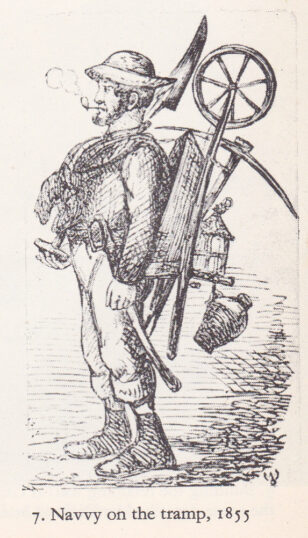
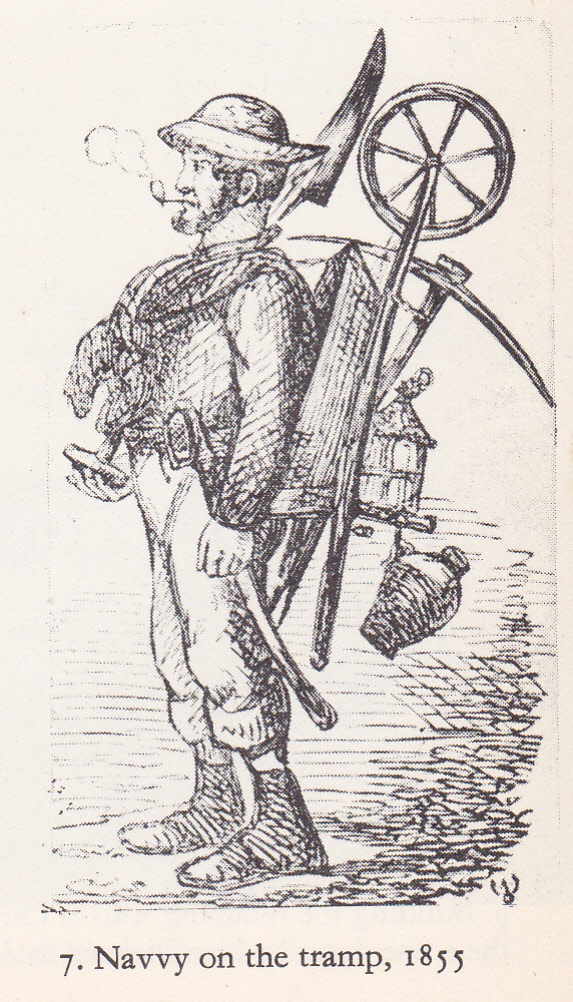
The navvies who actually built the line are rarely mentioned, regarded as rough and lawless, estranged from sober village society. Canon Norman, Bottesford’s recently appointed Rector, and his wife Lady Adeliza Manners, tried to preach to them in 1847: “tried service in school for Railway Labourers – four came”, and again a second time when none at all came. In reality, navvies performed extraordinary feats in constructing railways across the British Isles and overseas by little more than manual labour. They needed to be fit and willing to work long hours for meagre pay, living in temporary shanty towns and bothies constructed close to the lines they were building from scratch. Small wonder that the genteel entreaties of the worthy Rector and his aristocratic wife made little impression on them.
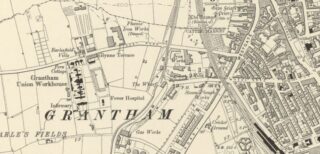
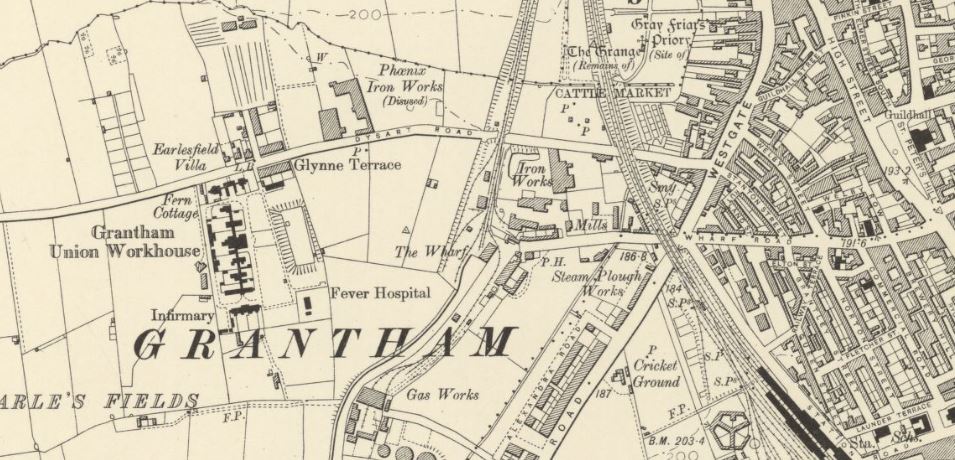
Three years later, the line opened, on the 15th July 1850, and Bottesford became a rural stop on the Ambergate, Nottingham and Boston and Eastern Junction Railway. In Grantham there were speeches by the Mayor, the Chairman of the Railway, the Vice-Chairman, the Deputy-Chairman and other dignitaries, with cheers, songs and general merriment. The Grantham station was built at the end of Wharf Road, next to the basin of the Grantham Canal, where it could deliver coal to the gas works and supply the iron works and mills in this part of the town. There do not appear to have been platforms, passengers alighting down to ground level. Mrs Frasier of the George Hotel announced that an omnibus was to be provided to and from the newly completed Canal Wharf station for the convenience of passengers. It is hard to envisage this on the ground today, though the abutment of the old railway bridge across Dysart Road can still be seen as can the embankment at the western end of Home Bargains’ carpark.
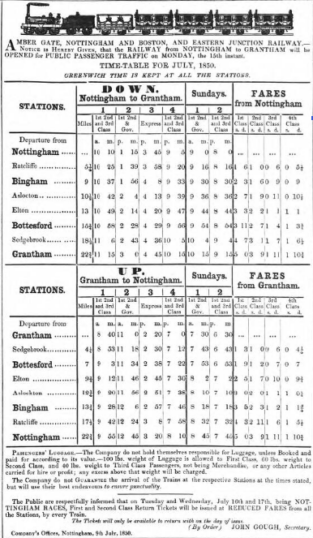
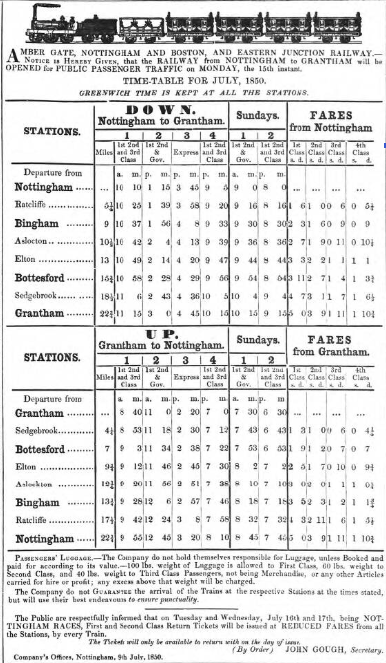
It was a two-track line from the start. Eastbound trains heading for Grantham ran on the up-line, westbound trains returning to Nottingham on the down-line. This is still the arrangement. The opening timetable shows four trains each way on weekdays, two on Sundays. The journey to Grantham from Bottesford took about twenty minutes starting from the Canal Wharf station. By September that year the schedule had been reduced to only three weekday services, but you could travel from Bottesford to London via Nottingham, Derby and Birmingham. The nine o’clock from Bottesford would get you to London at four p.m. In 1852 there were four daily services to Nottingham with connections onwards via Derby and Birmingham to Euston, but only three scheduled the other way! The 10.15 from Euston would get you to Bottesford just after 4 pm.
After 1852 the service was dictated by the Great Northern, whose London terminus was at Kings Cross. Bradshaw’s Guide for 1864 included the GNR’s Nottingham-Grantham service. By this date there were seven trains calling at Bottesford Monday-Saturday, three on Sundays. The Nottingham to Bottesford journey took about 30 minutes, Botteseford to Grantham took between 12 and 25 minutes. One early morning eastbound train stopped at Bottesford only to “set down from Nottingham and take up 1st Class London passengers only” for an 8.15 pm arrival at Kings Cross.
At first, there were four classes of seating, not just three. The fare from Bottesford to Grantham was 1s 9d First Class (about £9 at current rates), 1s 2d Second Class (c.£6) and just 7d (c.£3) for both Third and Fourth Class. For other destinations the Fourth Class fare was a farthing less than Third, except for passengers from Grantham to Sedgebrook who paid 6d Third Class but only 4p/1-farthing Fourth Class. But this fourth class seems to have been dropped after a couple of months.
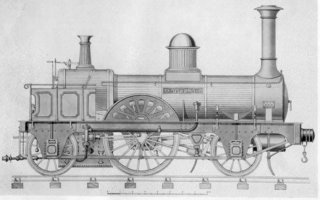
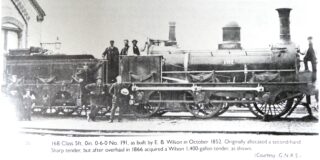
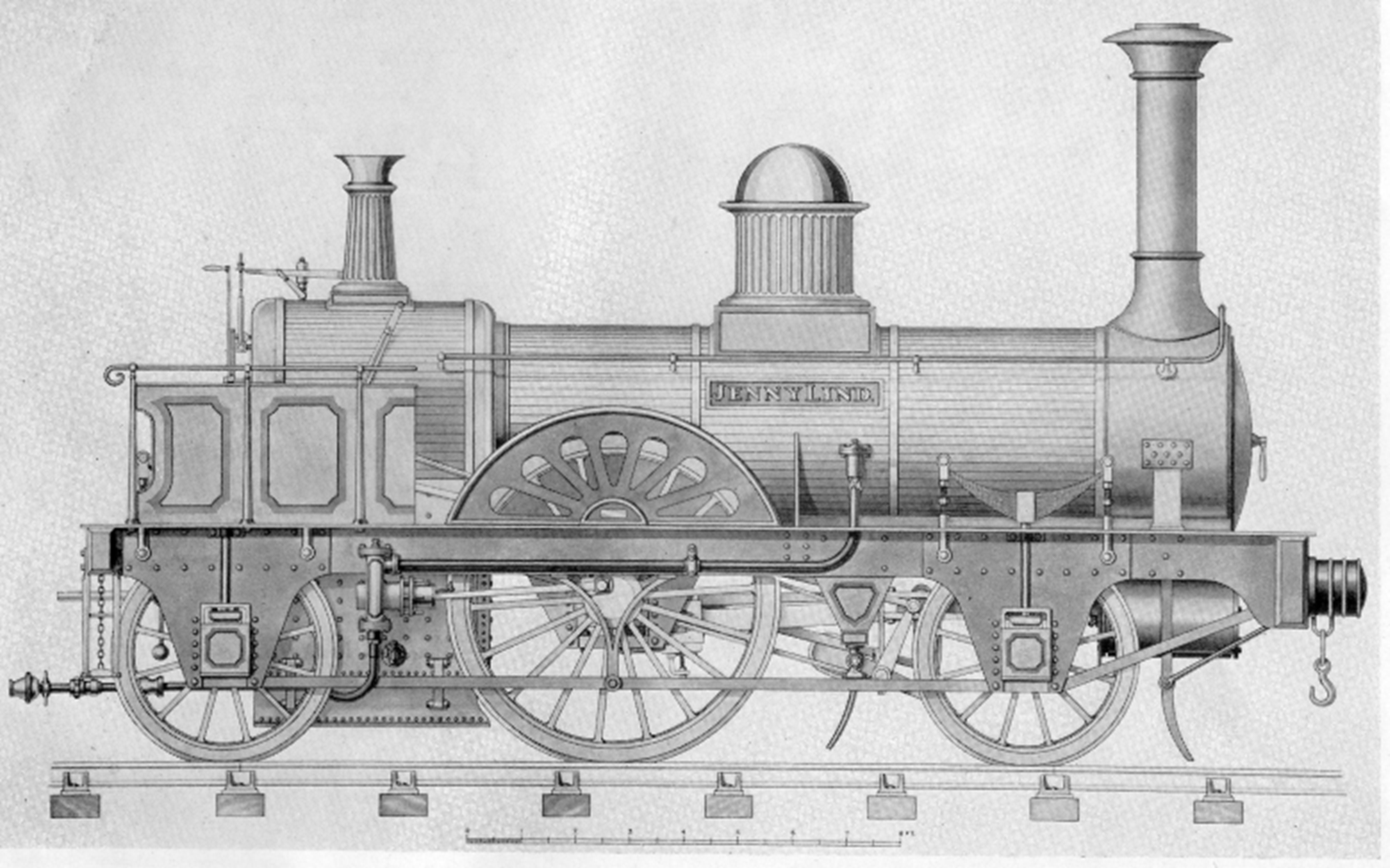
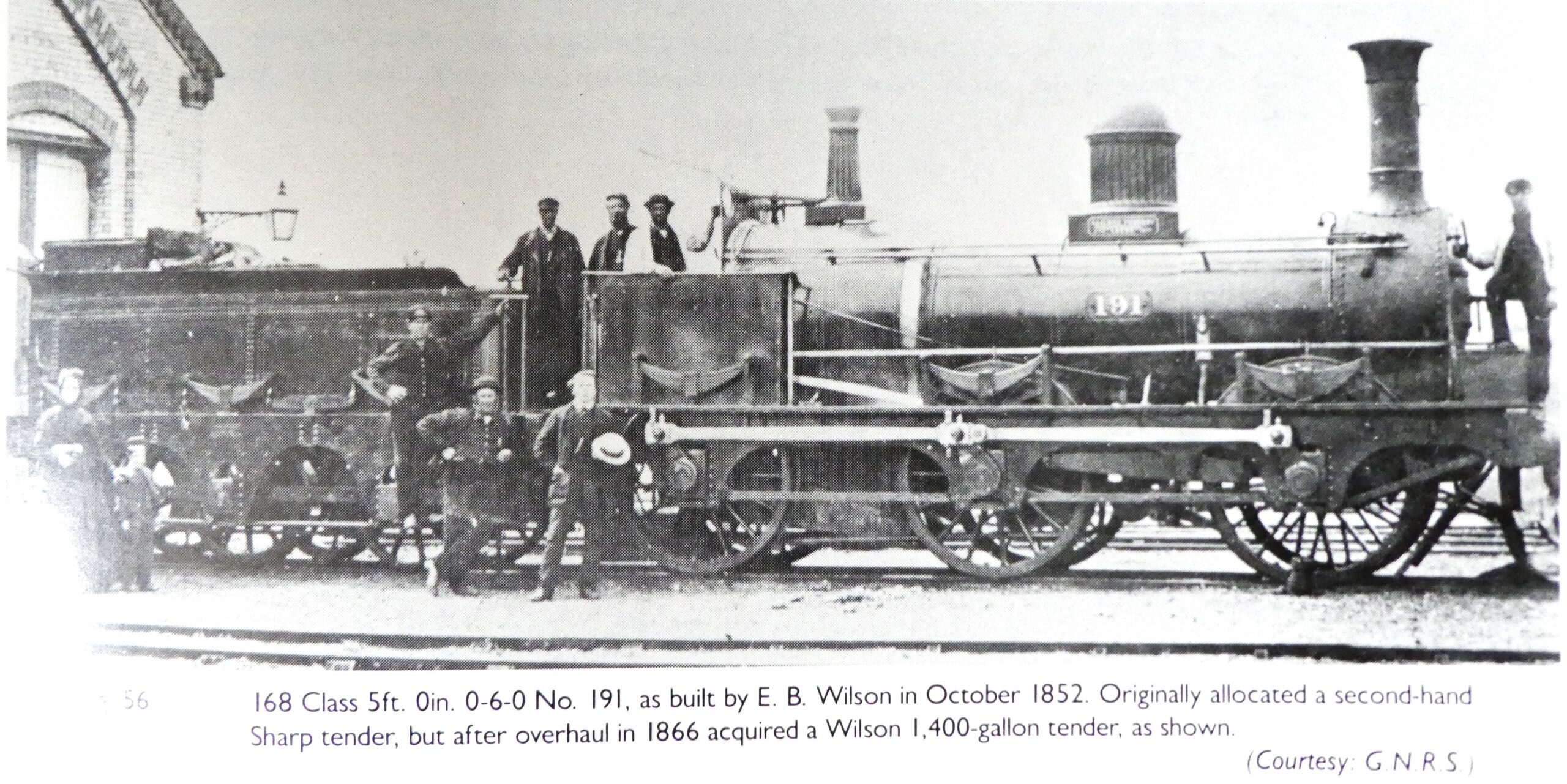
Trains were hauled by locomotives built by E.B. Wilson’s in Leeds, augmented by a Hawthorne from Newcastle and by two ‘antique’ locos Bury locos lent by the Midland Railway.
“Railway Diplomacy”
When it opened, in 1850, the new Nottingham to Grantham line, the Ambergate railway, depended in the permission of the Midland Railway in order to run its trains into Nottingham. It was never truly independent. Then its situation became considerably more precarious when the Great Northern Railway opened its line through Grantham in 1852 and encouraged the Ambergate to link up with the new main line and provide a branch service into Nottingham for its Kings Cross passengers. The rivalry between the Midland and the Great Northern put the Ambergate in a difficult position, perhaps threatening its ability to survive.
During the ‘Mania’ there had been a trend towards amalgamation of the startup railway companies to create regionally based networks. The Midland Railway (MR) was incorporated in 1844, led by Sir George Hudson “the Napoleon of the railway”, “the Railway King”, and spread its network of lines across the coal rich parts of the Midlands and Yorkshire. The London & North-Western Railway (LNWR) was incorporated in 1846 to extend the London-Birmingham into the Northwest and Scotland. Neither welcomed competition from a direct eastern route to Yorkshire, Newcastle and Edinburgh, but this was precisely the goal of the Great Northern Railway (GNR), also incorporated in 1846. The GNR aimed to undercut freight charges and extend its network into the coalfields of the East Midlands and Yorkshire. Its direct route to York via Peterborough and Doncaster was bitterly fought. Edmund Beckett, chairman of the GNR, publicly called George Hudson “a blackguard” on Derby station, as reported in Punch. The GNR’s ambitions were also opposed by the Board of Trade, which presented a petition alleging that its list of subscribers was false. This was rejected and the GNR’s Bill passed through Parliament in 1846 having cost over £600,000 in legal fees, “the most expensive parliamentary contest in British railway history”. Beckett had defeated Hudson, but the dispute rumbled on and went to arbitration under W.E. Gladstone, then MP for Newark, who finally ruled in favour of the GNR proposal.
As construction of the GNR advanced northwards towards Doncaster the Midland tried to pre-empt it by building eastwards from Nottingham to Lincoln, a 39-mile line completed in just 8 months and opened in August 1846 on a day of heavy rainfall. On the following day, subsidence of the line caused a disrailment at Gonalston and the death of the fireman. Nevertheless, the Lincoln line ran successfully and the Midland opened its new Nottingham station on Carrington Street in 1848, still in use today, but this failed to frustrate the Great Northern, whose route through Grantham and Newark to Doncaster opened in 1852.
The Midland and Great Northern both saw benefit from adding the Ambergate into their networks. The Midland tried to take it over in 1851, before the GNR were in a position to make a counter-bid. Many Ambergate shareholders voted to accept, but eventually the offer was rejected perhaps in expectation of a higher bid by the GNR.
At the start the trains running on the Ambergate line were operated by contractors E.B. Wilson’s, who had also supplied most of the locomotives, but the GNR took over this contract in July 1852, the month when it opened its main line opened from Peterborough to Doncaster. When the GNR’s station at Grantham opened in July 1852, the Ambergate immediately adopted it as its passenger terminus, keeping the Canal Wharf station for goods traffic, tying itself to the GNR but distancing itself from the Midland Railway. This immediately led to serious conflict with the MR. Writers such as Alfred Henshaw and Robin Leleux describe what happened:
“On the 2nd August, a passenger train arrived at Nottingham from Grantham drawn by a GNR engine. The station master, Mr Pettifer, probably acting under instructions from Derby, ordered the locomotive to be impounded in the old engine house. The GNR driver made a sporting charge at his captors in a hopeless attempt to get away, but he was evicted from his steed which was borne away in triumph and locked in the shed. MR workmen removed the rails to prevent its escape. Passengers had to wait several hours until a locomotive of the Ambergate company arrived to take the return train back to Grantham. Although the Ambergate Company protested that the impounded locomotive was simply hired from the GNR, several weeks passed before it was released”.
The hostility continued into 1853:-
“At the half-yearly meeting of the Ambergate company on the 28th February 1853 it was mentioned that the Midland had taken unsuccessful proceedings to Chancery to prevent the company or the GNR from using the Nottingham station and that there had been numerous and violent illegal seizures of goods and constant obstruction of the company’s traffic. The Bill for a new line and station was warmly approved. The Midland, in opposing the Bill, had stated that the Ambergate company had full powers to use their Nottingham station, but not that it [the Midland] had filed a Bill in Chancery to prevent such use.”
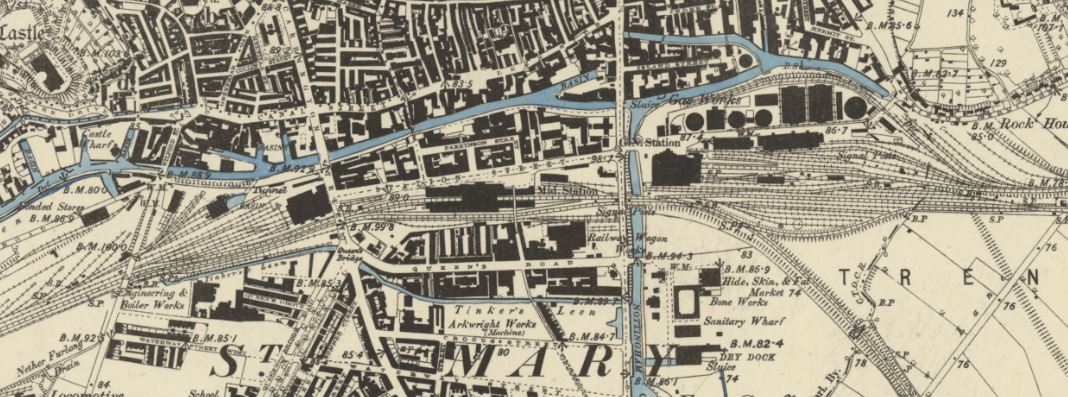
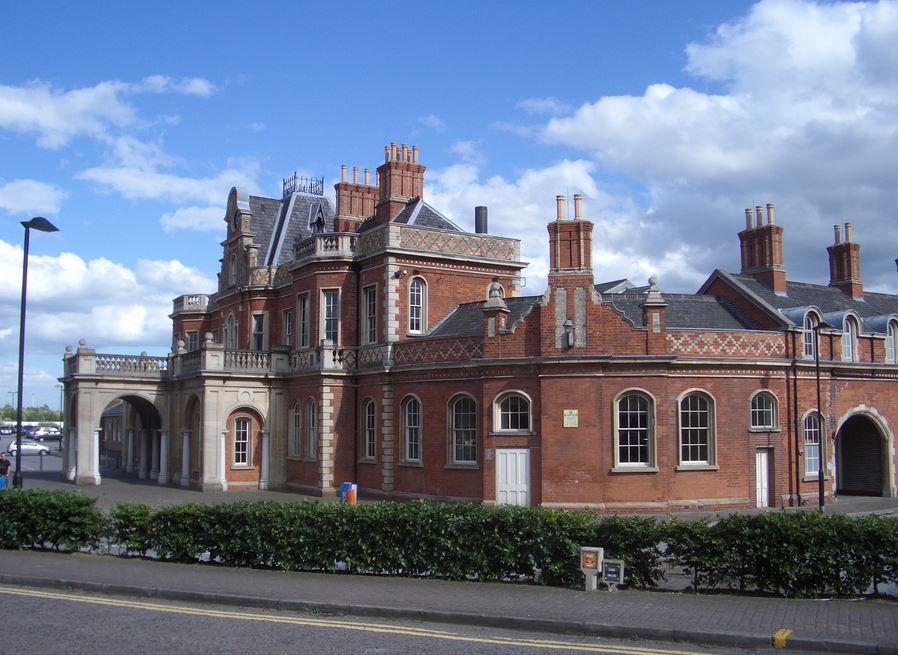
Goods traffic had to be carted to and from Colwick until a traffic arrangement was agreed and the hostility cooled off. Even so, the situation was unresolved and the Ambergate sought approval to build a separate line from Colwick to terminate at a new station at Nottingham. The Ambergate’s London Road station opened on 2nd October 1857, after the connection to the MR’s Lincoln line at Colwick had been removed. 28 The new station was designed by Thomas Chambers Hine, Nottingham’s leading architect. Its building is still standing, used as a fitness centre.
After starting as a Nottingham to Grantham branch line attached to the Midland Railway, the Ambergate had become a branch from Grantham to Nottingham attached to the Great Northern. The GNR had gained a route into the industrial East Midlands, with the prospect of extending into Nottinghamshire and Derbyshire to challenge the MR’s coal monopoly and provide passenger services to Derby and Stafford, which they did by building another line via Gedling and Daybrook, starting from their new marshalling yard at Colwick. In 1860, the Ambergate company finally leased itself to the GNR for 999 years, an amicable arrangement which lasted until they were both absorbed into the LNER in 1923.
The later railways
The Boston line
The original eastern leg of the original Ambergate’s route to Boston was built by the Boston, Sleaford and Midland Counties Railway, starting in 1853 from Barkston junction on the GNR main line north of Grantham. The route to Sleaford opened in June 1857, from Sleaford to Boston in April 1859. The GNR worked the whole line and bought it outright in 1865. It also added an extension westwards from Barkston to Allington Junction in 1875 as an alternative to the risky points junction at Barkston following a crash when a Boston train over-ran signals and was struck by an express, killing the fireman and one passenger. It enabled goods trains from Nottinghamshire to travel into Lincolnshire without negotiating the difficult track arrangements at Grantham Station. However, passenger trains from Grantham to Sleaford still had to use the points at Barkston right up until 2005 when the additional loop at Allington used today by passenger trains from Grantham to Sleaford was added!
The GNR-LNWR ‘Joint’ Line
The Approach Bridge on Nottingham Road crosses over the path of the former railway from Melton to Newark opened in 1879. This was the “Joint” Line built jointly by a consortium of the Great Northern and the London Northwestern to run from Northampton, via Market Harborough and Melton Mowbray, to Newark. Again, it was navvies who actually built the line. Canon Norman tried again to reach out to them: “There was great tension in 1876 when the new Newark-Melton railway line was being built. The advent of the navvy has been much dreaded by the nervous and timid … [but] the labourers are of good character”. The contractors employed “none but the better class of labourer”. Canon Norman invited them to visit Belvoir Castle and this time 240 came and were treated to bread, cheese and a pint of beer during their visit.
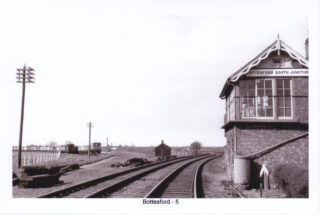
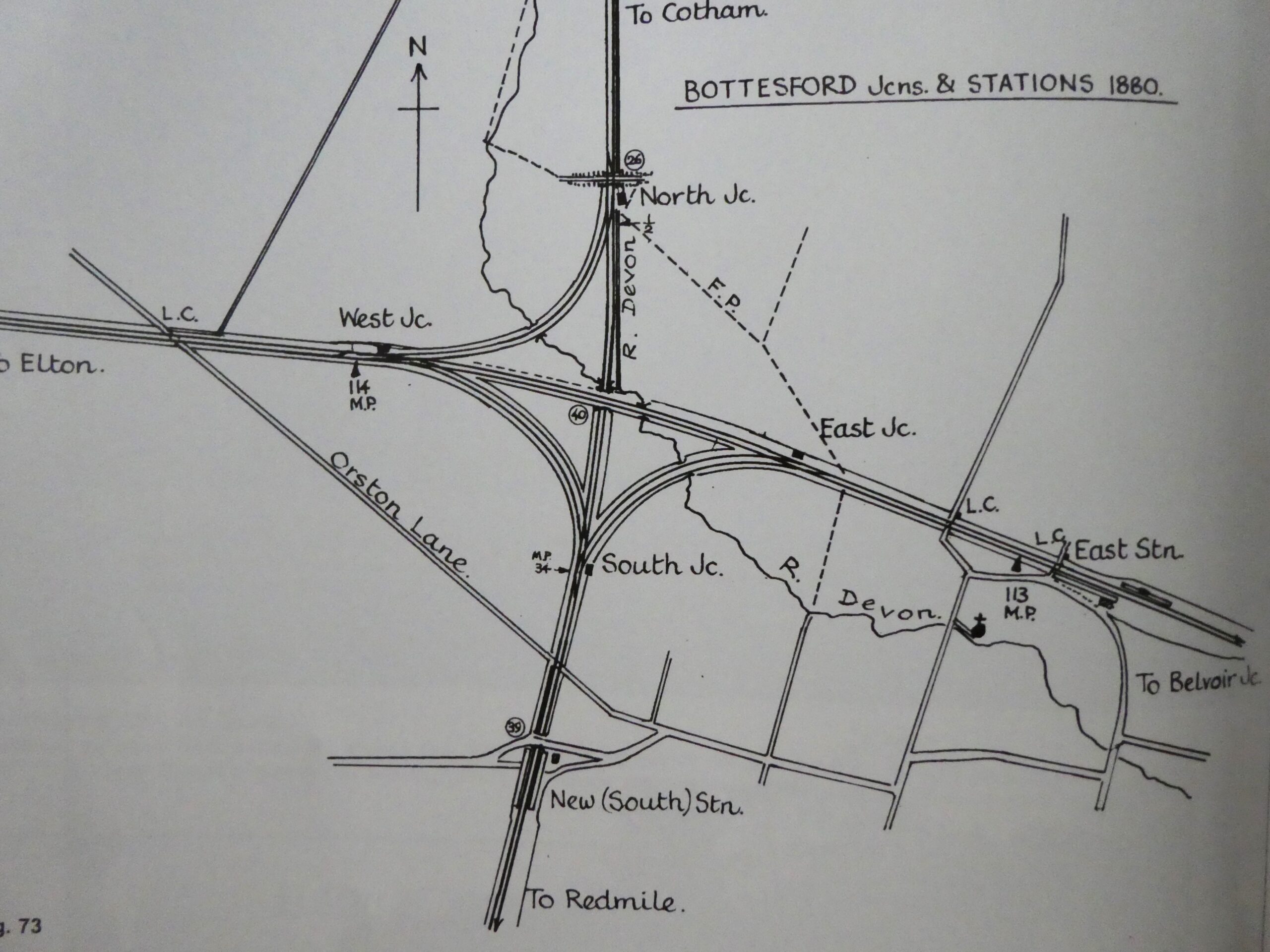
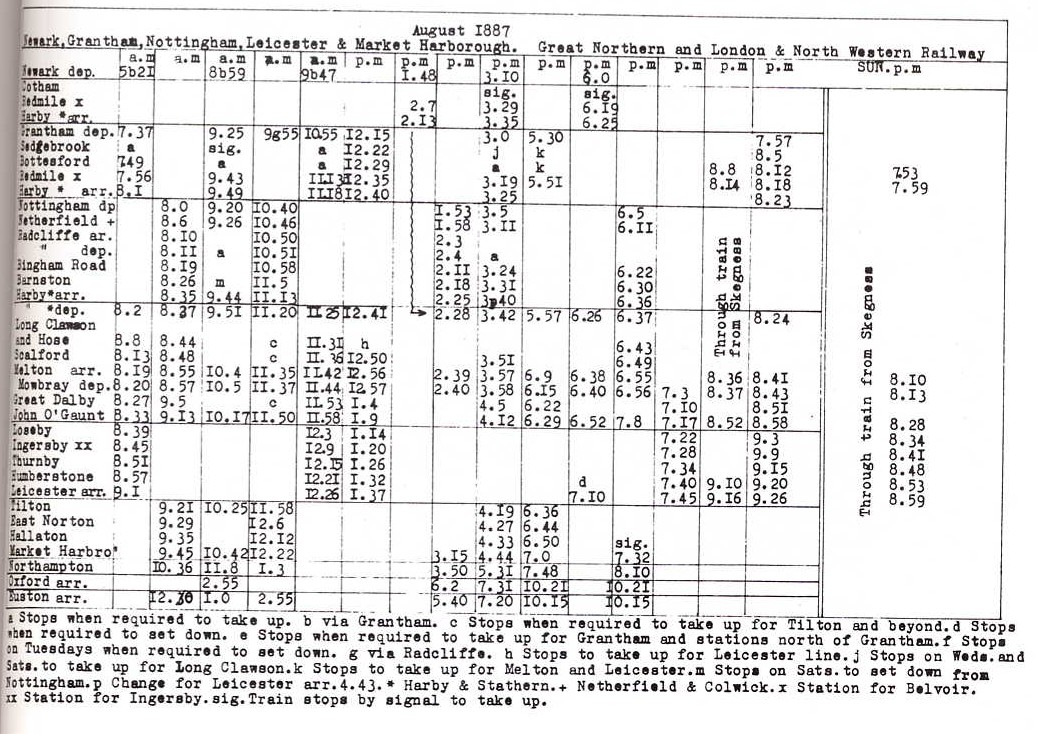
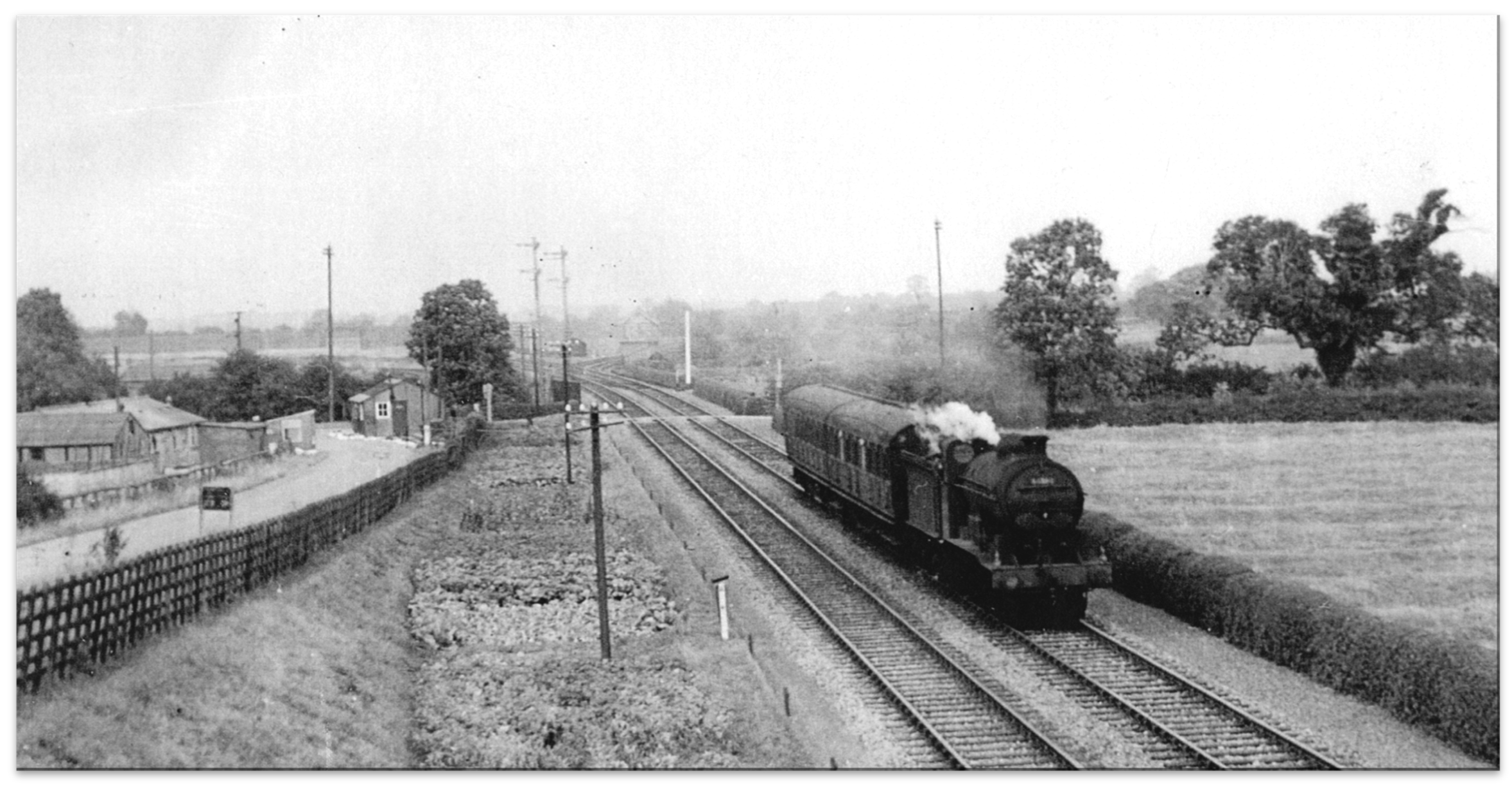
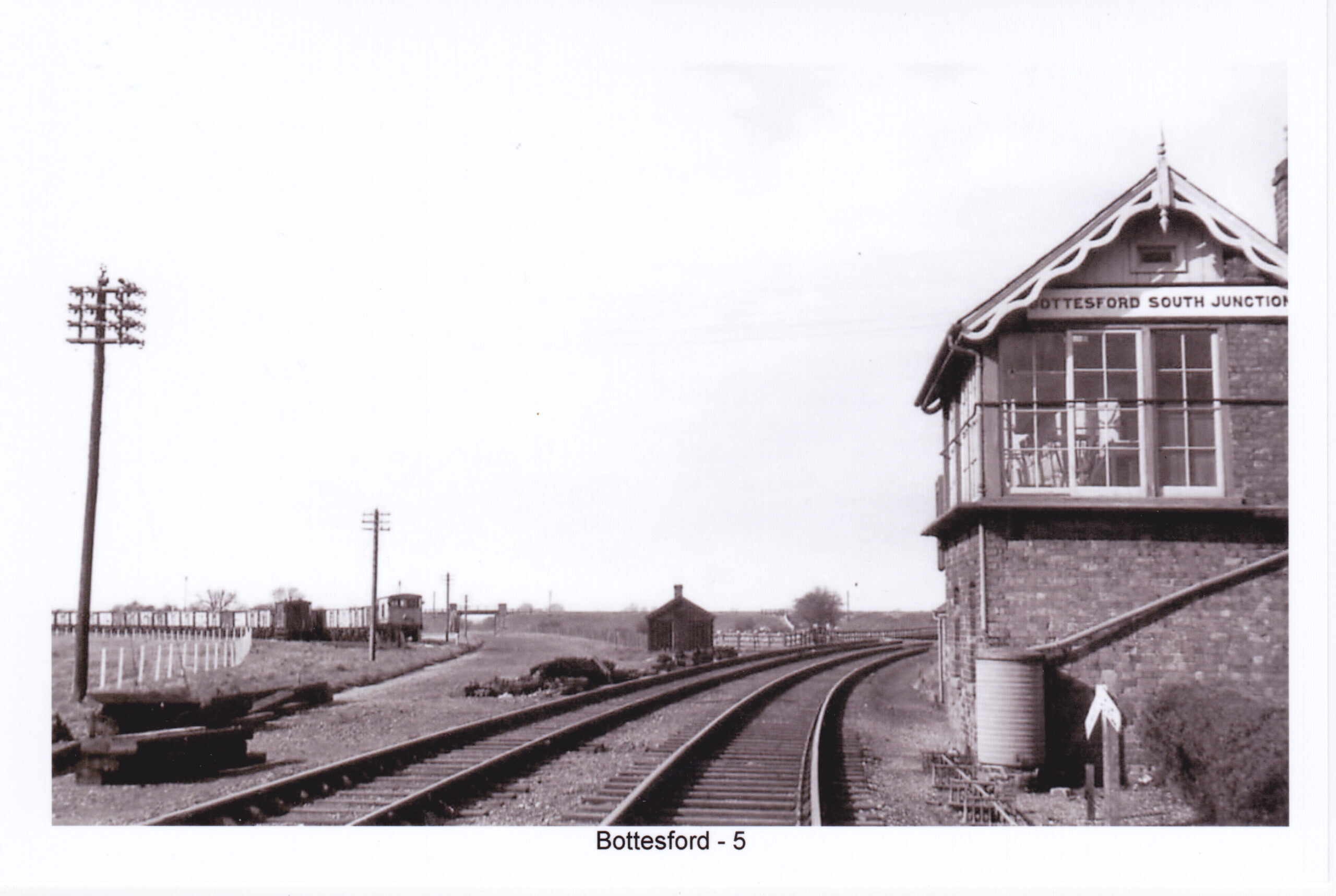
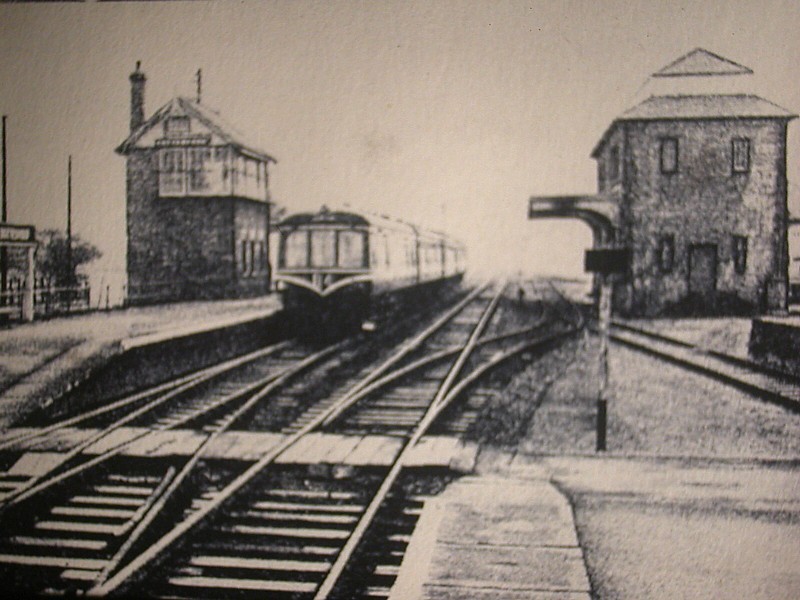
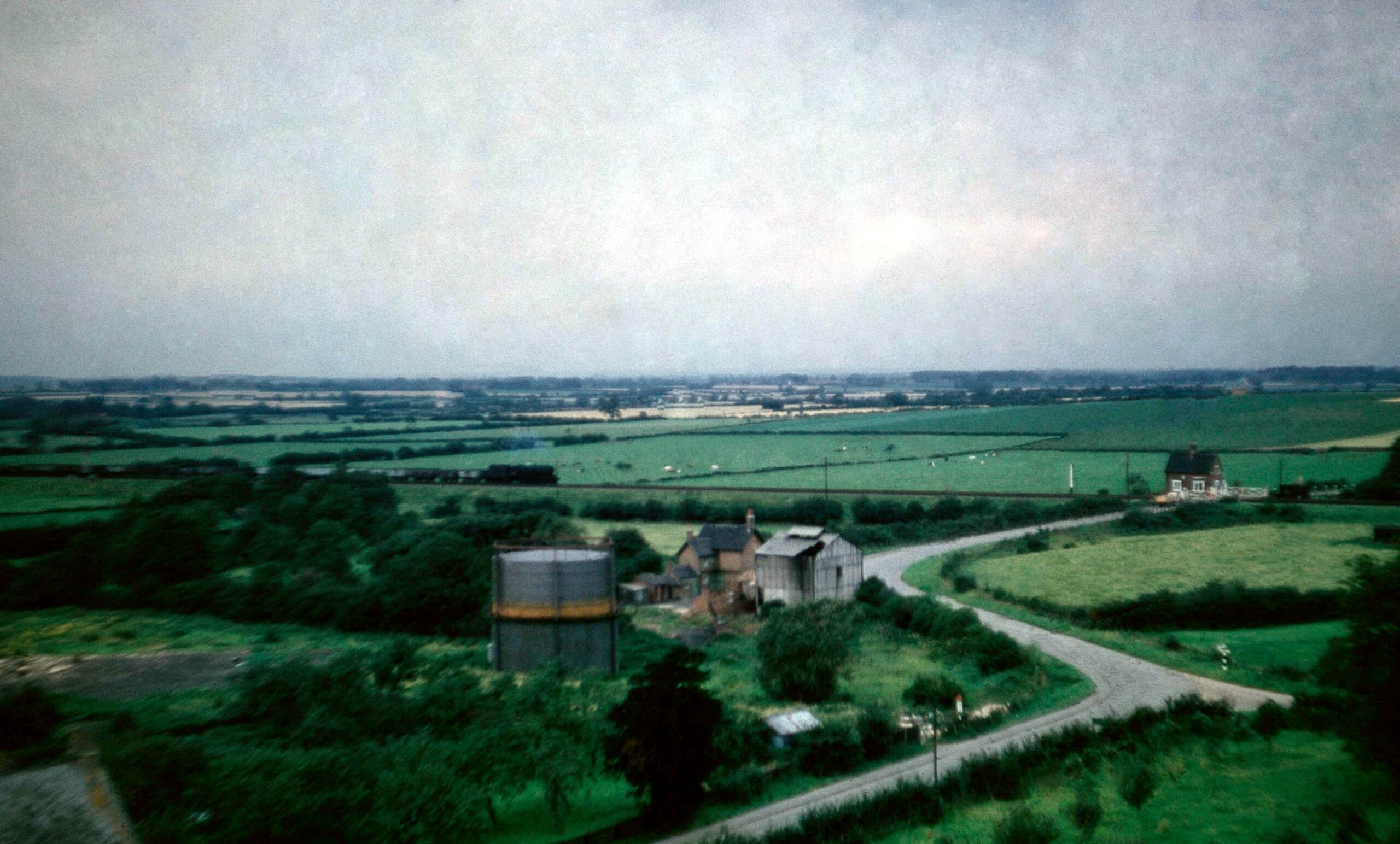
The new railway passed under the Ambergate at Bottesford, linked by means of three short spur lines and signal boxes.The underpass bridge has been filled in, but can be seen in old photographs. Bottesford South station was opened in 1879 immediately south of the Approach Bridge. It had platforms and waiting rooms, together with a station master’s house and three railway cottages, but no goods sidings. The station closed in 1882 following withdrawal of the Northampton to Newark service after only three years of operation. Grantham to Melton trains stopped at the older Bottesford station then branched onto the new line for the journey through Redmile, Harby and Stathern, Hose and Long Clawson, and Scalford before reaching the Joint line’s Melton North station. This service was used by Bottesford people to shop in Melton and their children attending senior school there. The lines were heavily used by holiday ‘specials’ from Leicester and Northamptonshire to Skegness and other east coast resorts. South of Melton the line wound its way through rural east Leicestershire. From its highest point at Marefield a branch line set off to the new GNR station at Belgrave Road in Leicester.
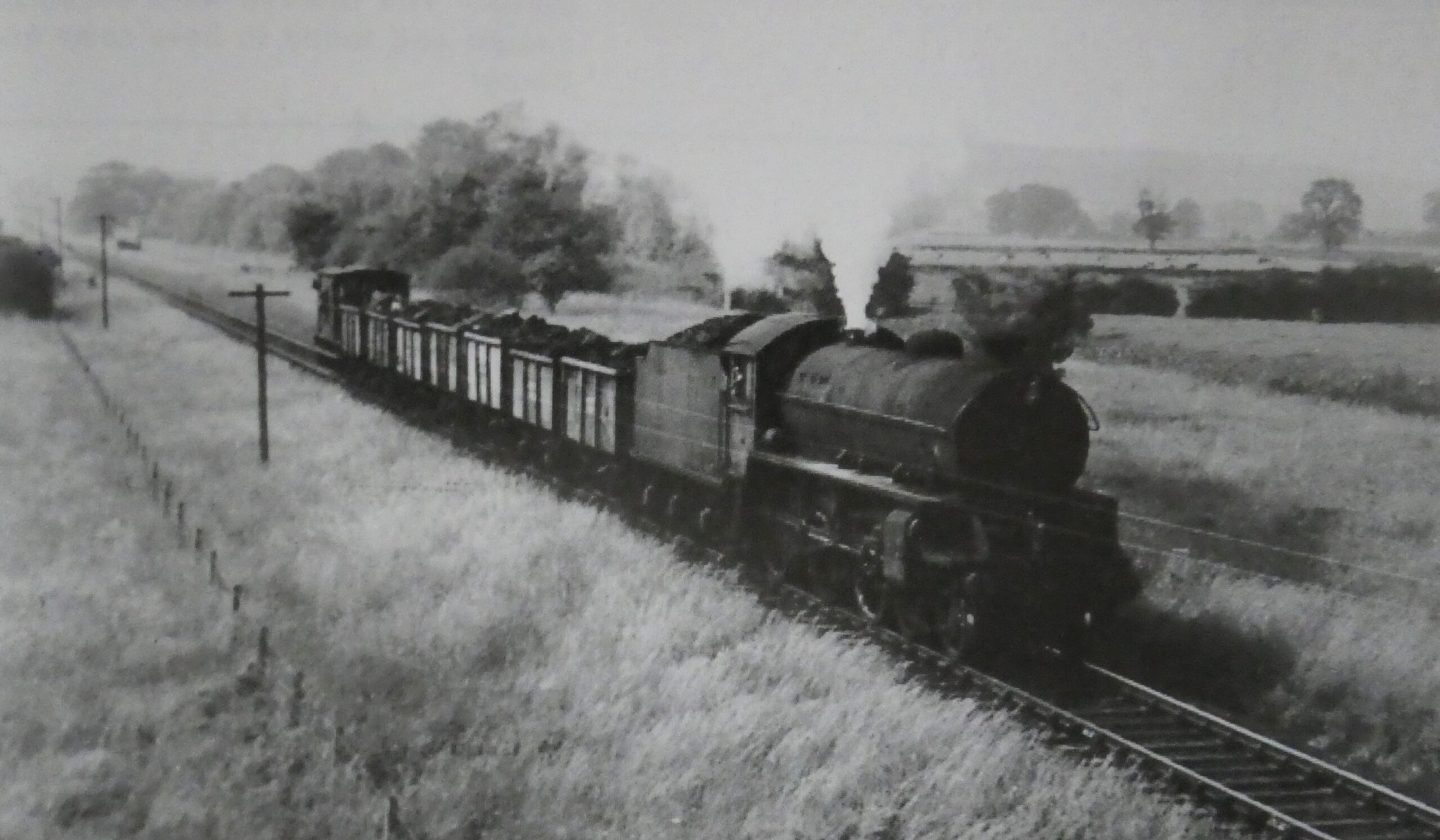
The branch from Harby to Saxondale also opened in 1879 to improve the LNWR’s Nottingham to Melton service and its coal trains from Nottinghamshire direct to London. Not to be outdone, the MR opened its line from Nottingham to Melton in 1880. Both lines were used to transport locally quarried iron ore to Stanton Iron Works in the Erewash Valley. The ‘Joint’ Line had a loading bay near Stathern for the cable incline which served the ironstone quarries near Eastwell.
Denton Mineral Line
Ironstone quarries near Woolsthorpe and Harston was served by the GNR branch line from Belvoir Junction, near the Muston Gap, to Woolsthorpe, which opened in October 1884 and extended to Denton and Harston in 1885. There was an loading bay at Woolsthorpe at the foot of another cable incline bringing ore down from workings around Brewers Grave. The minerals branch line ran almost a hundred years, closing in 1979.
Bottesford Station
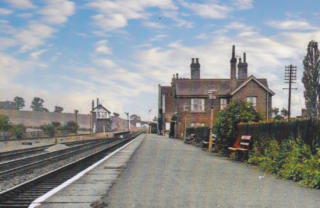
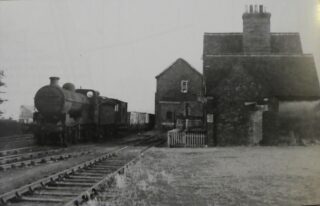
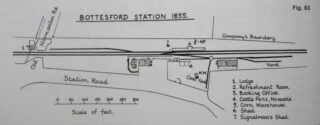
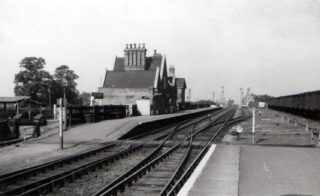
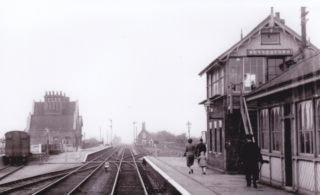
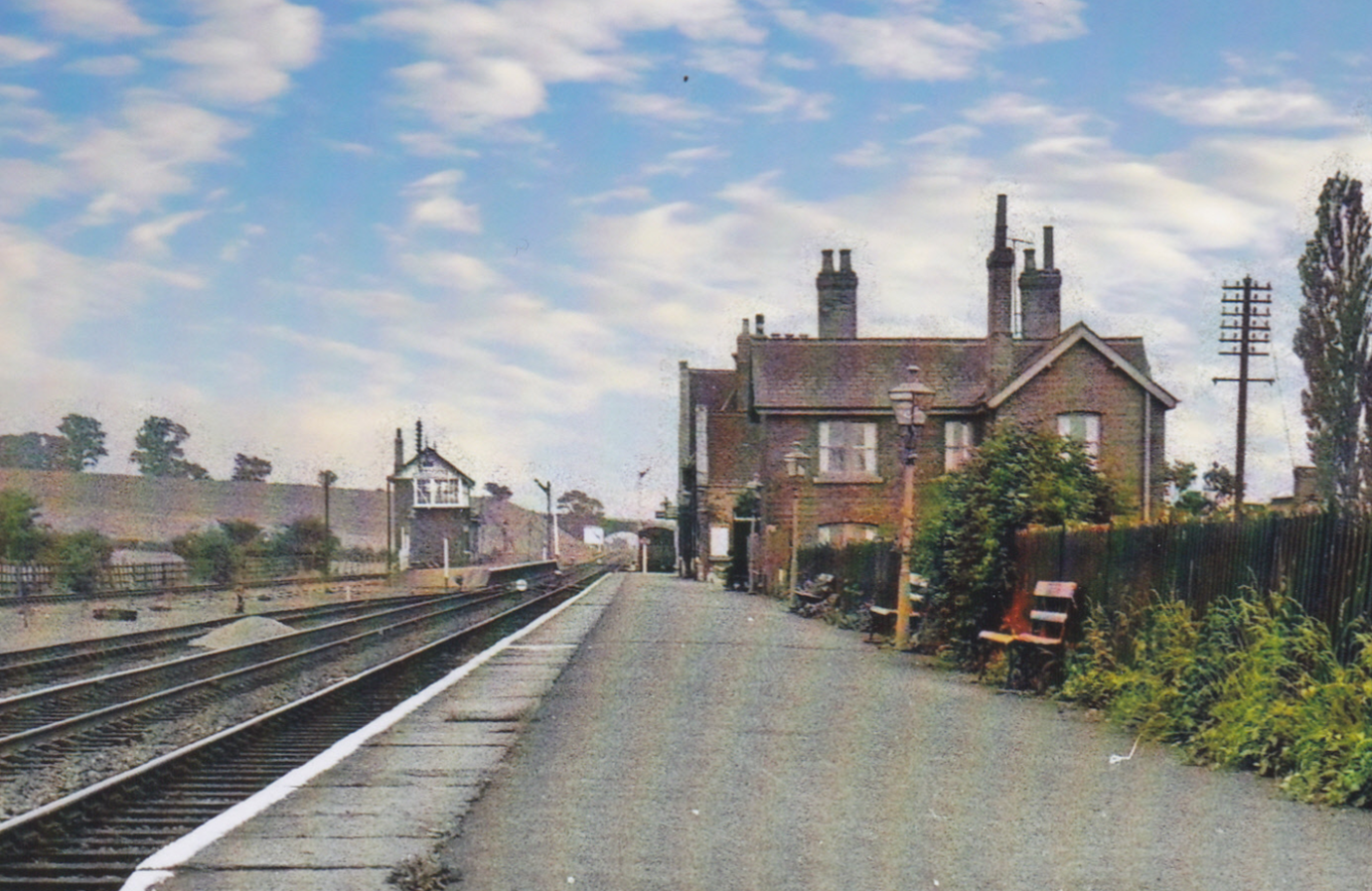
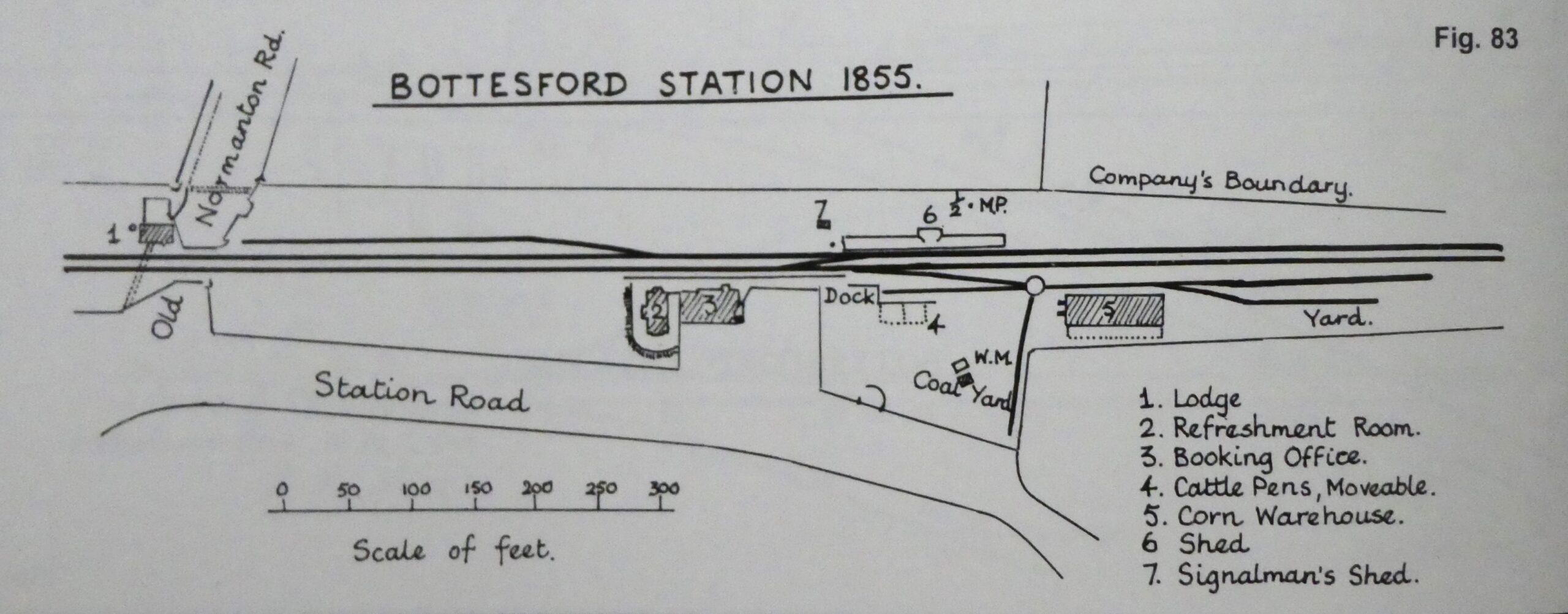
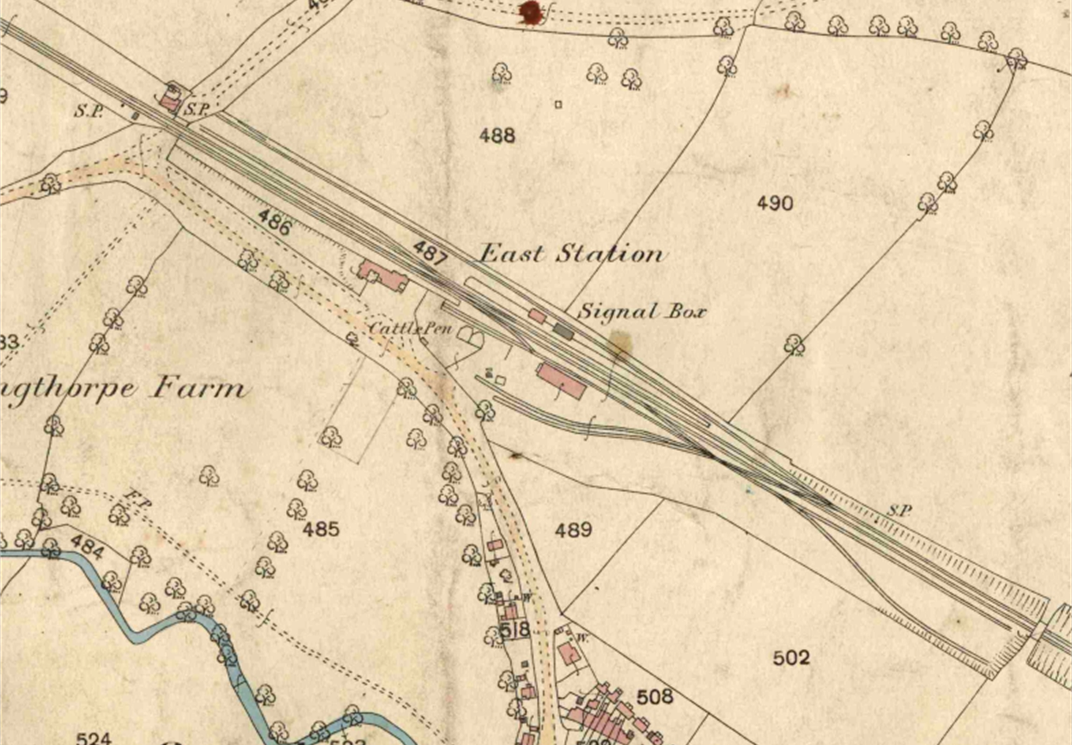
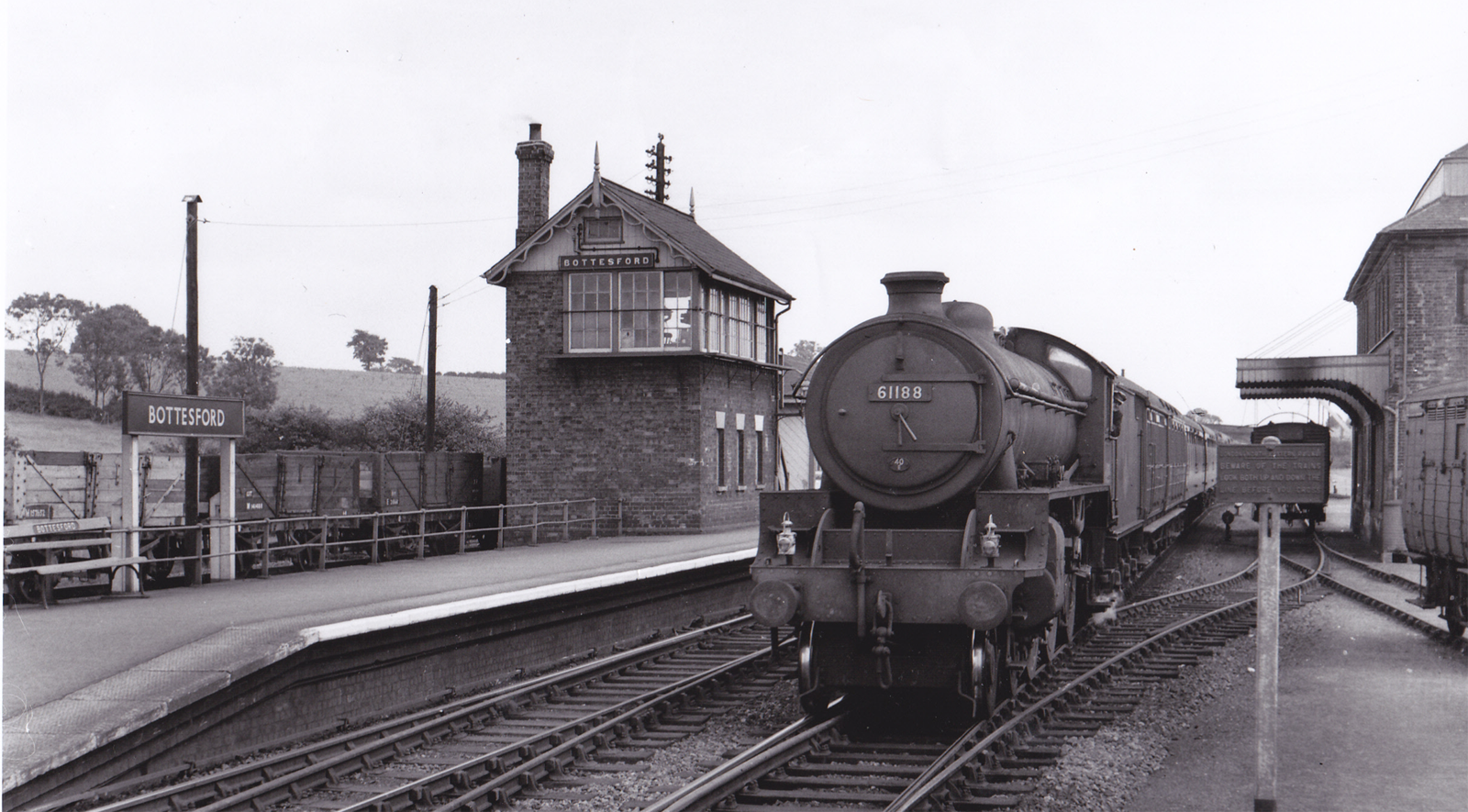
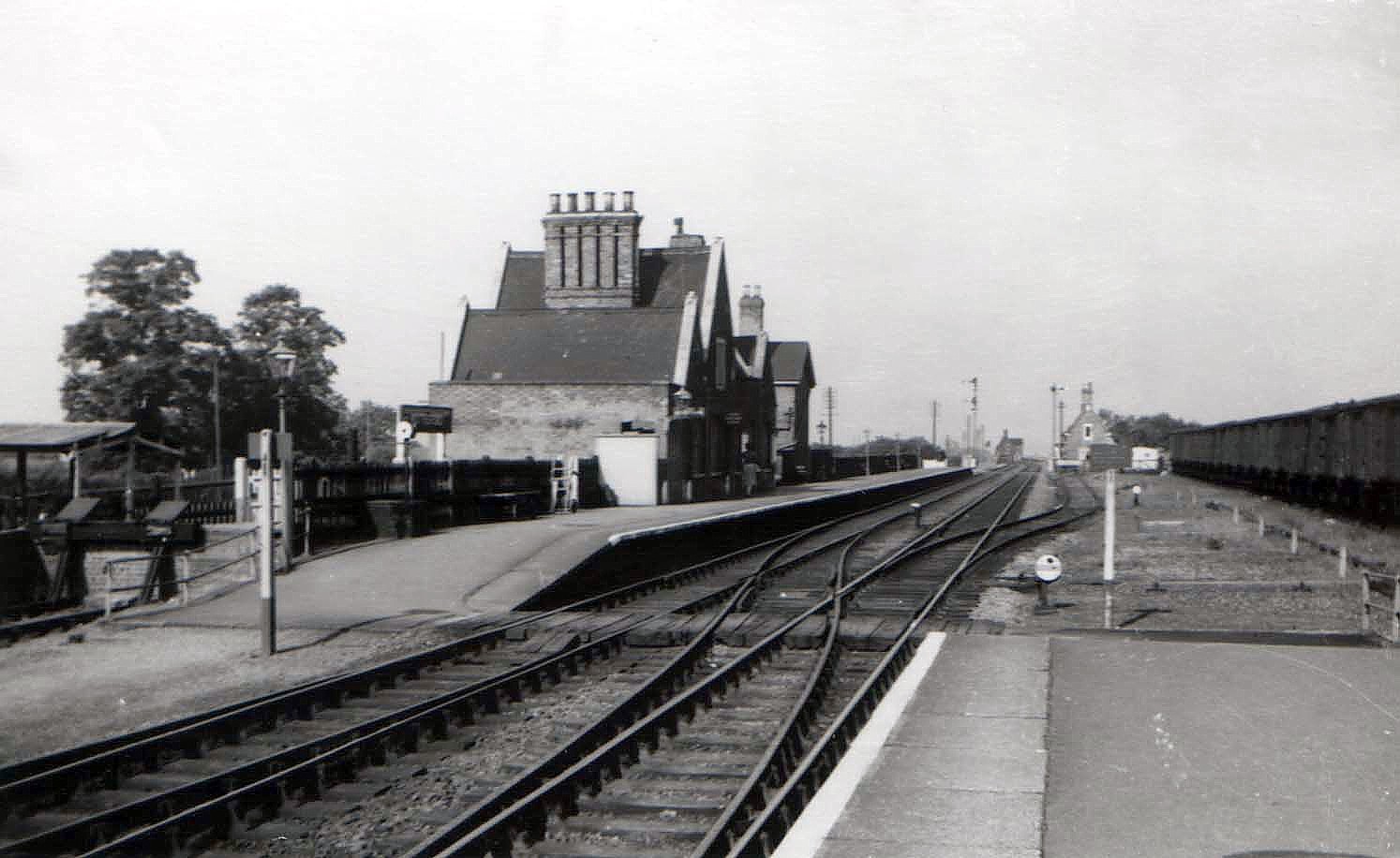
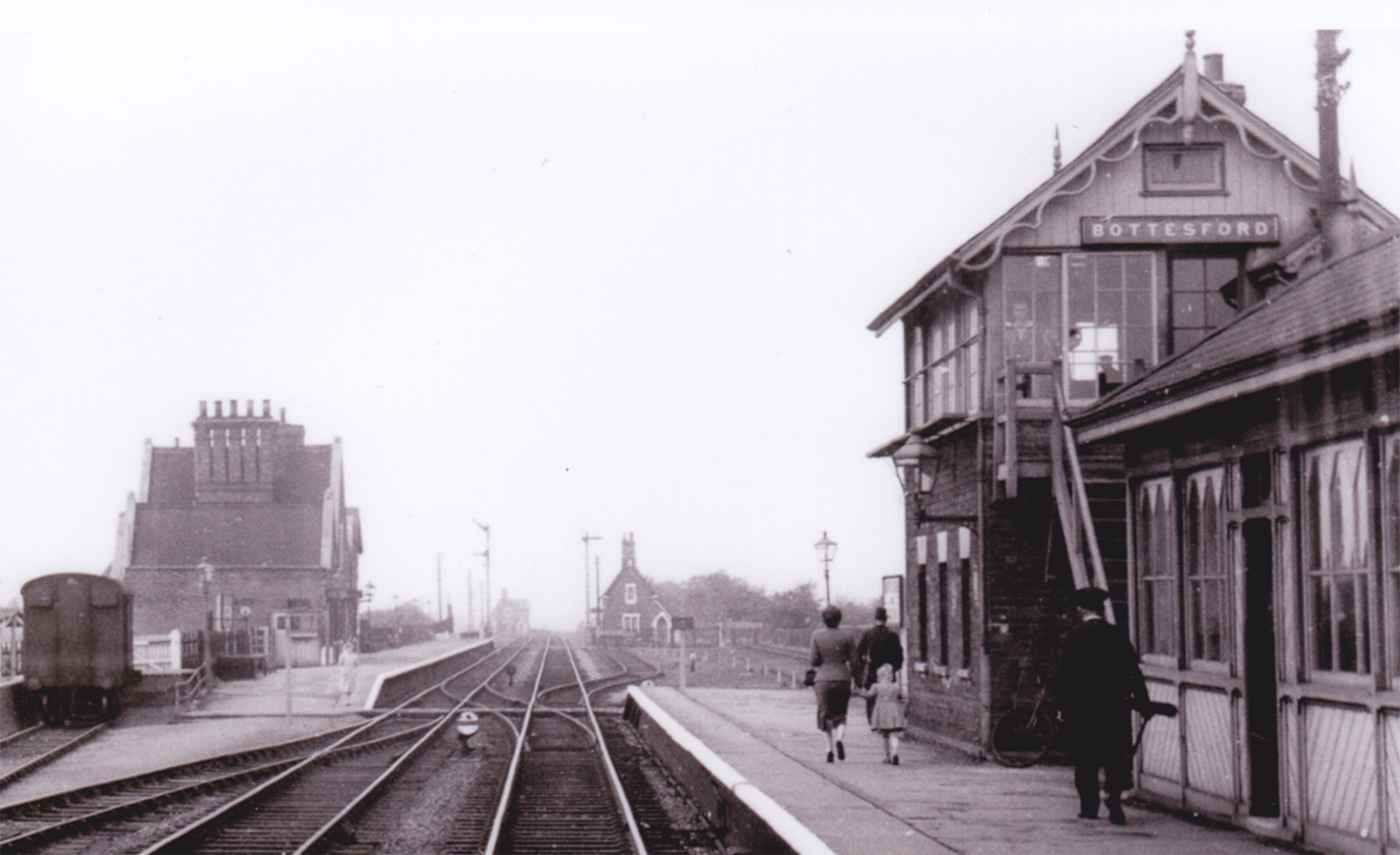
Bottesford station is now 175 years old. The 1855 map reproduced in Alfred Henshaw’s excellent book shows that many of its facilities were built for its 1850 opening or very soon afterwards. The platforms were offset perhaps so that trains would not stop right opposite each other, their locomotives engulfing passengers in the other train in smoke and noise. Passengers for eastbound trains reached the up platform via a track-level walkway, taking care to look out for oncoming trains! The platforms are still offset. The walkway was only recently replaced by a footbridge.
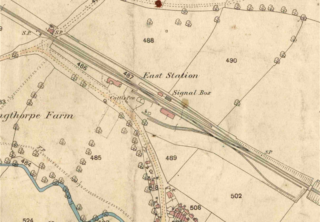
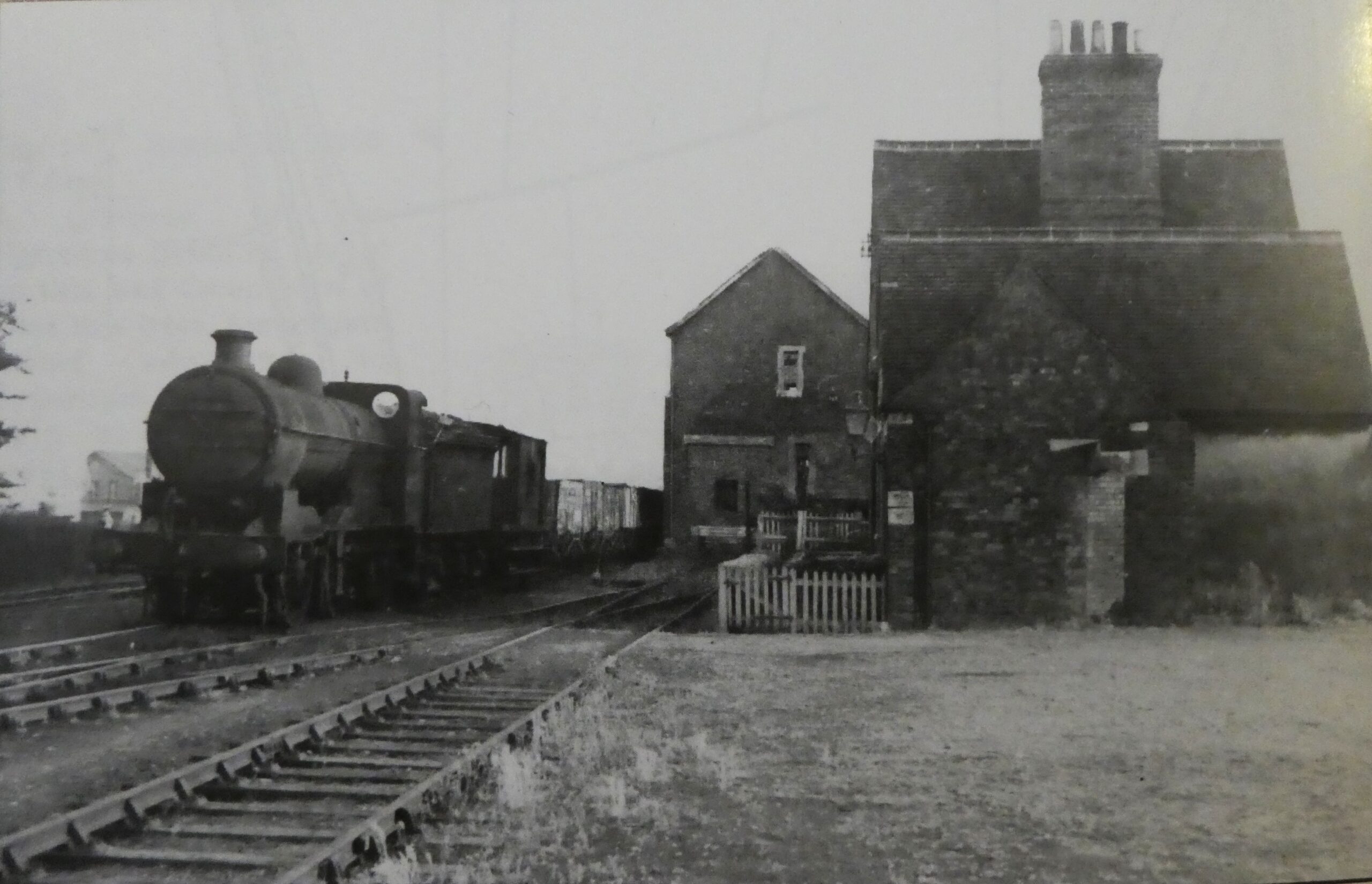
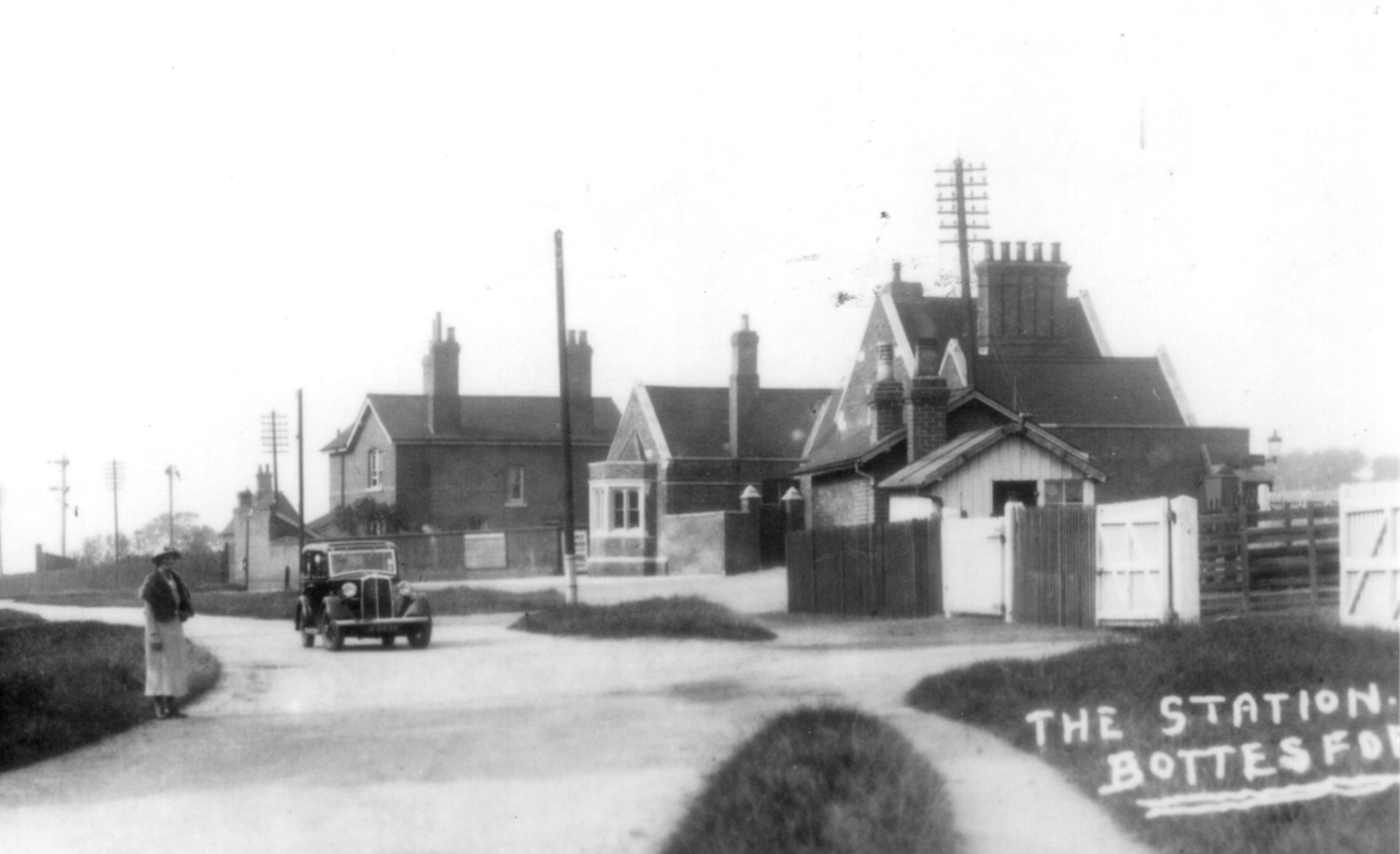
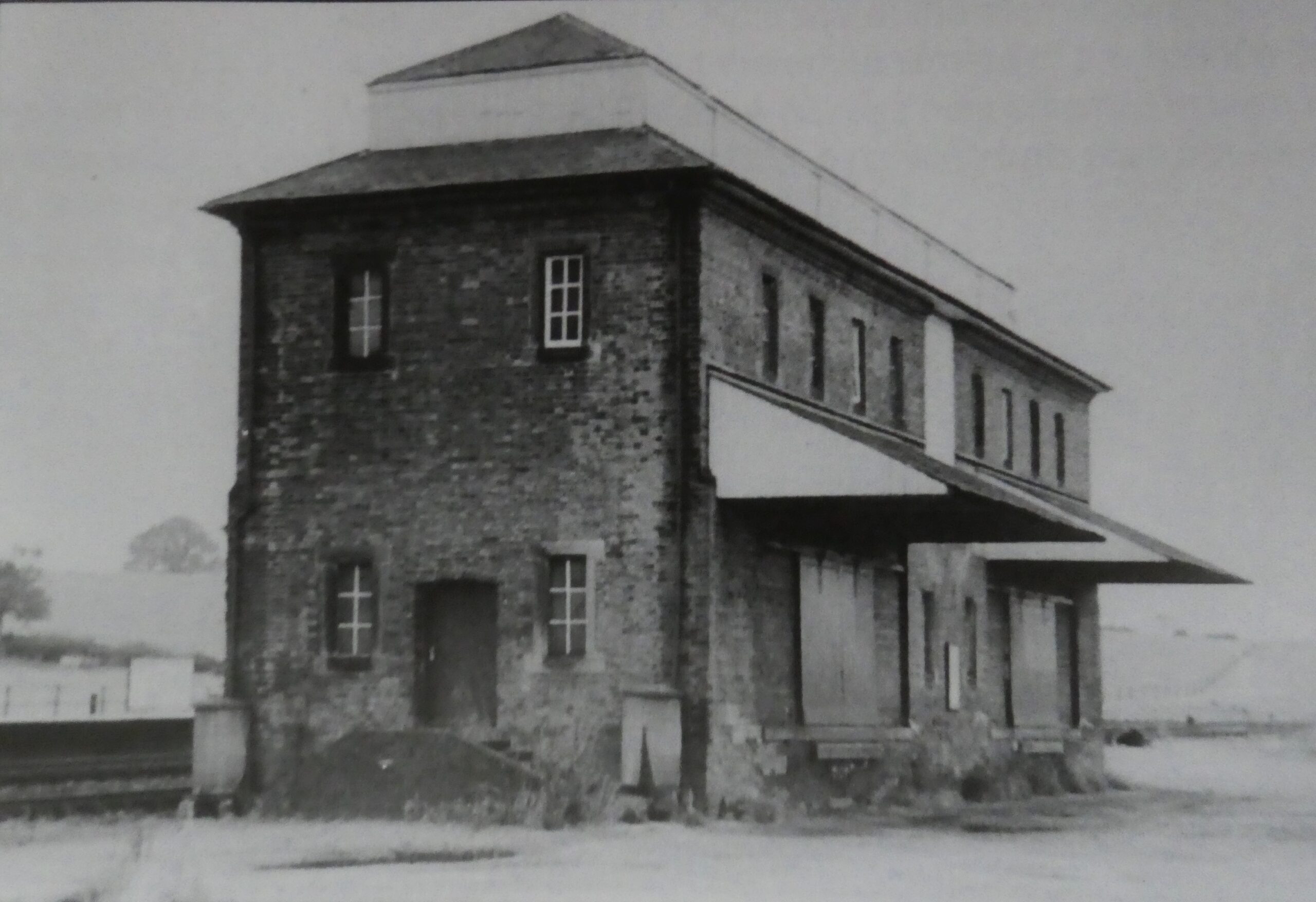
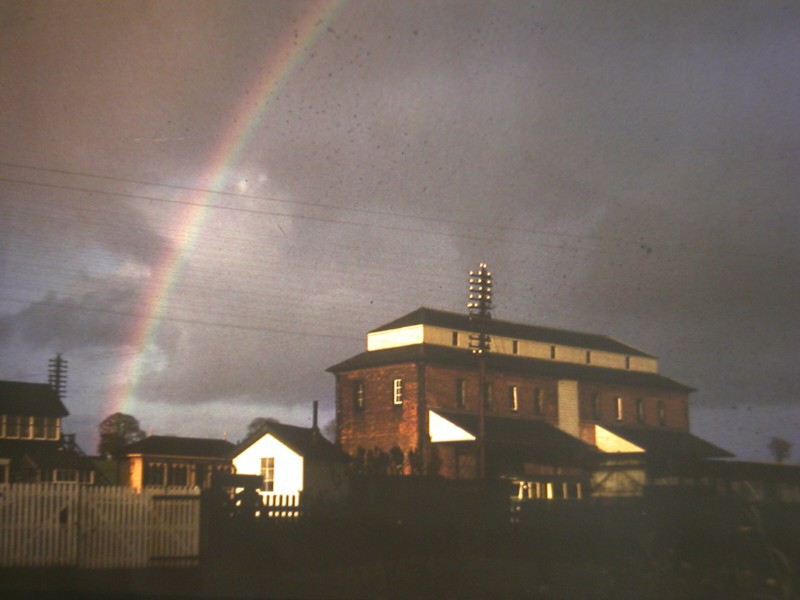
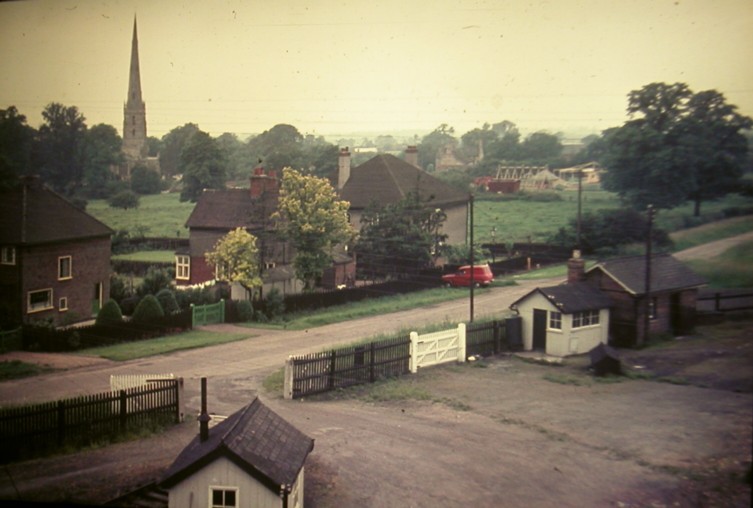
The main station buildings stood at the eastern end of the down-line platform. East of this there were sidings where livestock and other agricultural products could be loaded. This area included a warehouse for storing grain and produce, and a secure stock area. On the up platform there was a signal-man’s shed and another ‘shed’ for passengers waiting for trains to Grantham. At the western end of the station the railway track was crossed by a roadway which led from Station Road over the hill (Palmers Hill, now known as Beacon Hill) north of the station, with branches heading to Normanton and across the fields to Allington. Today this is little more than a footpath passing the beacon and trignometric point, but it was probably the main route into Normanton at one time. Traces of its metalled surface survive in places, and the hand-operated level crossing gates are still there, though the elegant gatekeeper’s cottage built around 1850 to T.C. Hine’s design was wastefully demolished only recently. By 1883 the sidings had been lengthened, and a signal box has replaced the ‘shed’ on the up-platform which also has seen the addition of a comfortable waiting room.
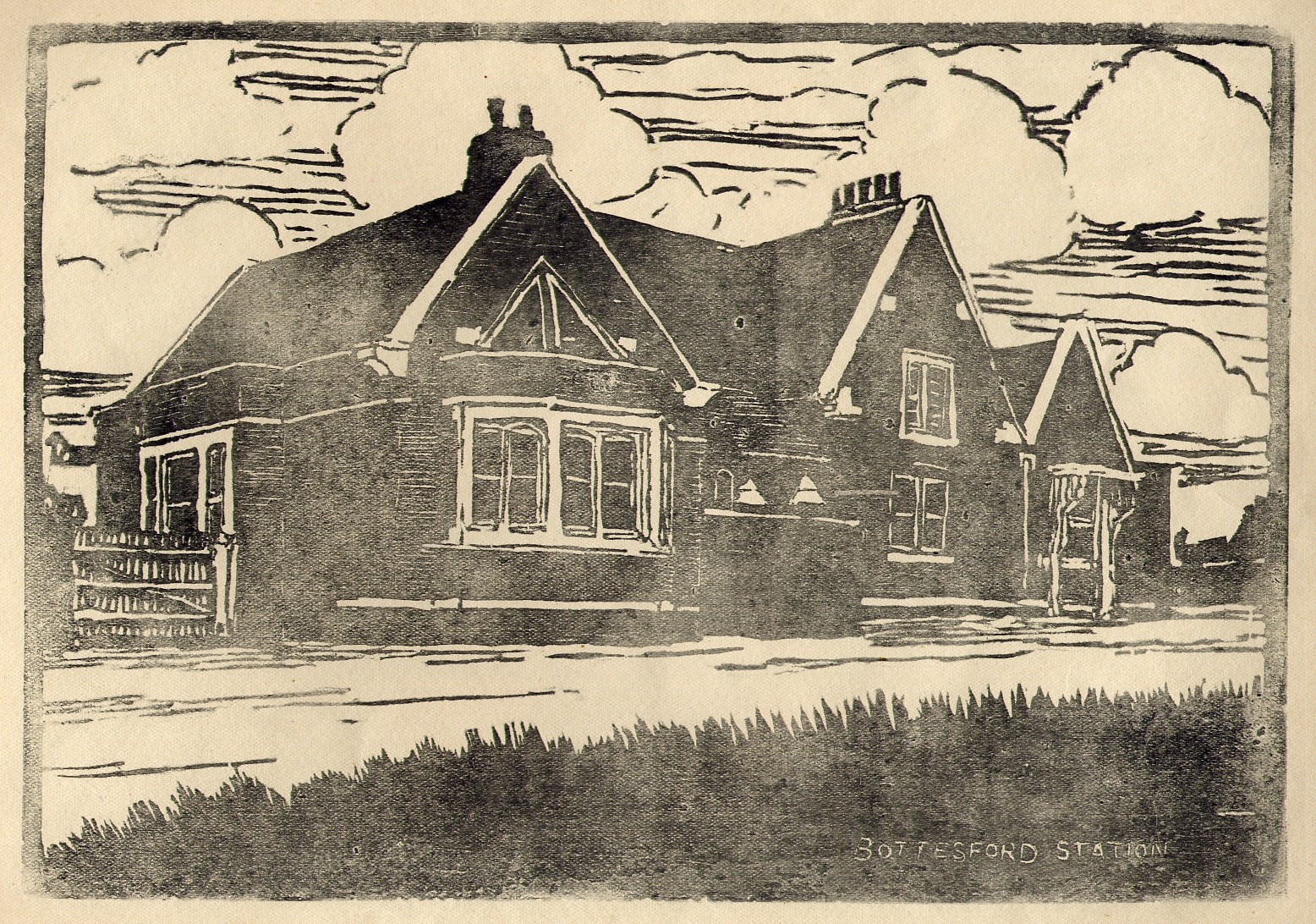
The main station buildings on the down-line were designed by T.C. Hines, the Nottingham architect. A bow-windowed refreshment room, no longer standing, was joined to the two-storey stationmaster’s office which is still there. The extra domestic station house appears to have been added later, perhaps around 1880.
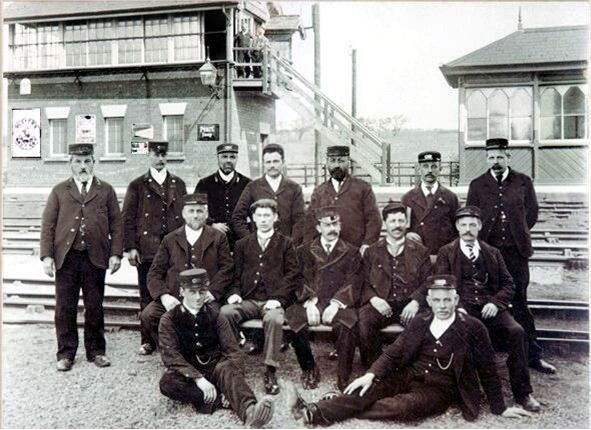
The station had a permanent staff of porters, labourers and office staff led by the station master. The 1851 census recorded ten railway workers living in Bottesford: the station master, three porters, two gatekeepers, three railway labourers and one platelayer, but no signalmen. By 1871 there were eighteen including platelayers, but still no signalmen. Signalling may have been by staff standing by the line and waving flags.
After the ‘Joint’ line opened in 1879, there were five signal boxes. One stood on the up-line platform on Bottesford station, the others were placed at each corner of the complex junction. The 1881 census recorded 7 signalmen, 46 labourers and platelayers, 3 gate keepers. Bottesford station staff of 3 clerks and a cashier, a timekeeper and stationmaster George Ogilvy. The 1891 and 1901 censuses also record a railway inspector at Bottesford. The staff at Bottesford South station in 1881 comprised a stationmaster named Stephen Bee, a telegraph linesman, two signalmen and a signal fitter.
Accidents
Accidents during construction of the lines went unreported for the most part. One exception was when, on the July 9th 1847, the Stamford Mercury reported the accidental death of 13 year old Walter Ledger, crushed by a tip-wagon while working on the line.
After Ambergate the line opened, the first train crash was not long in coming, as reported by the Nottingham Review (16 August 1850) when an engine with tender and train of coaches was derailed between Gonerby Tunnel and Sedgebrook, the cause an obstruction apparently placed on the rails by a “base and malicious person”. No injuries were reported: it could have been much worse! A relief train from Grantham arrived at Nottingham only 65 minutes late, ironically in time to see a locomotive setting out from Nottingham to investigate what had happened. It would be some time before a telegraph line was installed.
A more serious accident happened in October 1850. David Joy, the foreman for railway contractors E. B. Wilson and Company, gave his personal account (published by Wikipedia):
Nottingham Goose Fair coming, and a special ordered for Nottingham, I snapped at the chance of driving one of the engines. I don’t know how it all came about, but at night I found myself on the leading engine, the Bury behind with old Pilkington as driver, down at the junction of the Mansfield line … It was pitch dark; and we waited for a signal to go on to Nottingham with our train, and waited long. At last a rustle, and I thought we were going to be liberated by the passing out of the mail to Derby. So watched for her disappearing sideways to the right, but no, I could see her sweeping round and approaching us. And instantly I calculated that she could not have stopped and passed on to the up line at the junction, so must be on our line rushing upon us. It was not many seconds before we found all this true, as we jumped from our engines and rushed forward on the “in” side of the curve, and only just in time, for I saw the flare of the ashpan of the coming engine ripple over the sleepers as she came on and heard the broken buffers of my own engine wizz over my head. It was only just in time, the next instant our two poor little light Bury engines were one wreck of material in front of the big six-coupled, with a train of twenty crammed carriages behind her. The footplate of my engine disappeared entirely, the firebox of the engine falling in between the legs of the tank—buffers and buffer beams gone altogether. It was an awful experience, and none of us forgot it in a hurry.
David Joy again: The Midland lent some more engines … one was nearly the death of a nephew of one of my directors. He wanted to ride with me on the footplate one night with a special. I said, No! We ran down Bingham Bank into a fog — stuck — no weather board. Suddenly we went through the road crossing gates, the bits flew all round us, we knew how to duck.
Were the early railways dangerous? As with the coal mines which the railways were built to serve, isolated injuries and even fatalities were not unusual, but only the more spectacular mishaps, collisions and crashes made the headlines. A sad incident that was recorded happened at Bottesford on the 23rd August 1895, when Doctor Frank Marsh Wright, son and partner of elderly Bottesford village GP James Wright, lost his life, as reported by the Nottinghamshire Evening Post: Shocking Occurrence at Bottesford – A Doctor Killed … as the train moved off Dr Wright rushed through the wicket gate on to the platform and attempted to enter a carriage near the end. He grasped the handle and ran with the train. He failed to open the door, and before he could loose his hold slipped, and fell between the carriage and the platform. The train was brought to a standstill as quickly as possible but the wheels of three coaches had then passed over his legs. Severely injured and unconscious, his friend Dr Robinson and his father were quickly on the scene but could not save his life. The train proceeded on its journey.
Another occurred on Nov 8th, 1919, described by the Grantham Journal as a Distressing Fatality, when Smith Taylor, for several years the Orston Lane crossing keeper, opened the gates to allow a motorist to cross over immediately before a train crashed through them. The driver of the 4.28 from Grantham saw that the gates were against him but was unable to avoid crashing through them. Smith Taylor suffered extensive fractures and other injuries, and died a short time afterwards.
The Railway and Village Life
Villagers enjoyed greater personal mobility. People could travel further for work, to meet friends, to attend a better school, or for a host of reasons, or just for the pleasure of it. Gladstone’s Railway Act of 1844 ensured that Third Class passengers had seats in a closed-in carriage rather than the open trucks of earlier days, and that at least one train per day offered Third Class, known as the Parliamentary Train.
The station had sidings and facilities for handling goods and agricultural cargoes. A storage warehouse and animal pens were built next to the down-line sidings. Farmers took deliveries of animal feed and fertiliser. Greenhouses could be heated. Livestock, grain and market garden produce could be sent fresh to towns and cities far away. At the same time, there was greater variety to be had in village shops. Former luxuries like tea became cheap and plentiful. Postal services, following introduction of the Penny Black back in 1840, became quicker and more reliable, and newspapers and books could arrive more quickly and up to date. Railways were pioneers of the telegraph, which soon became a public service.
Bottesford Police Station had opened in 1842, during the Chartist movement, and a new village school (now called the Old School) opened in 1855. Gas lights appeared on street corners after Bottesford Gas Works opened in 1866. Brickyards prospered, there were steam-powered corn mills, a steam laundry and a small malthouse on Queen Street. Coal filled the domestic grate and heated water in the copper. Gas mantles gradually replaced the candle and the oil lamp.
In 1851 there were 37 “lace runners” in Bottesford, a cottage lace industry, and a “lace manufacturer” distribute work to the “runners” and collected the finished items, but by 1861 this had all but disappeared. Cheap coal allowed Challand’s and Hoe’s brickyards to prosper for a time, but the number of brickmakers in the censuses fell away after 1871, suggesting that local hand-made bricks were supplanted by cheaper bricks brought in by rail from Northamptonshire. Village builders enjoyed a boom around 1881 when 62 bricklayers were recorded in Bottesford in contrast to about 20 in earlier censuses, perhaps in relation to the construction of the Approach Bridge.
There were other changes. It was a difficult time for the farmer, as increasing imports of food and grain undercut the price of locally grown food. British-grown wheat sold for 56s/9d a quarter in 1877, but the price had fallen to 31s a quarter by 1886. Though the number of farmers remained high up to 1901, the number of farm workers decreased, in Bottesford from 317 down to 116, the average per farm halving from 8.8 to 3.9. At the same time, the population of the village declined from almost 1800 in 1851 to about 1500 in 1901, probably because young people moved away to find better paid work.
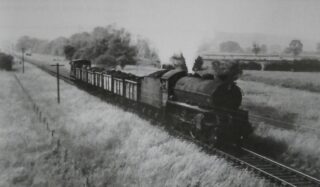
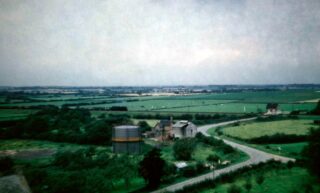
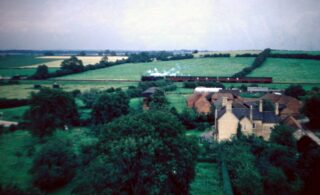
Tourism was increasingly popular, for those with leisure time, during the late Victorian and Edwardian decades. The seaside was a great attraction, and railway ‘specials’ from the Midlands towns and cities were a regular sight passing through Bottesford. Holidaymakers seeking peace and the freedom of the open air need not travel so far. Bottesford lay in the midst of the tranquil green countryside of the Vale of Belvoir within reach of the urban towns of the industrial Midlands. The Vale, serene and timeless, was a place to pass a day, or even a week if you could afford it, among its fields and villages. Railways provided the easy means of getting there, conveniently traversed by lines from all four points of the compass. There were inns and accommodation in farms and houses, there was food and drink to be had, historic churches to be visited and the aristocratic splendour of Belvoir Castle which opened its doors to the public. Visitors arriving by train could relax in the “timeless Vale”, as Michael Honeybone put it. The more energetic visitors could bicycle through the lanes or hire a pony. There was angling in the canal for guests of the Bottesford Angling Club.
Collett and Whitehead’s Guidebook, 1905
Victor Collett, Bottesford’s head teacher, was an enthusiastic champion of the discerning visitor. He and John Whitehead, a young clerk at Bottesford station, prepared a booklet, “How to Spend a Holiday in the Vale of Belvoir”, published in 1905. This gave “some account of the Castle and its surroundings, and of Bottesford and its Parish Church”. It provided helpful information about the “Railway and Other Arrangements” (for travel), as well as “Inns and Private Houses for the Accommodation of Visitors etc. … People from Nottingham, Derby and beyond alight at Bottesford: Leicester visitors coming to Redmile. Visitors from Yorkshire and The North generally make Grantham their headquarters and drive through from that town. … Bottesford (G.N.R.) Station is handy to the village, and conveyances meet most of the trains during the summer months.”
The authors recommended Visitors to obtain Tickets to View the Castle (price 3d.) at either Bottesford or Redmile station and regaled them with a poetic flourish:
The stately homes of England
How beautiful they stand
Amid their tall ancestral trees
O’er all the pleasant land.
The deer across their greensward bound,
Through shade and sunny gleam
And the swan glides past them with the sound
Of some rejoicing stream.
Then follow descriptive passages which eulogise Belvoir Castle, Bottesford and Bottesford Church, before adding brief descriptions of other villages and episodes of history of the Vale. The booklet advertised businesses offering rooms, refreshment or other services. Visitors could subscribe to the Bottesford Angling Association, 2/6d for a week’s fishing, day tickets 1/-. The Six Bells Inn offered Broughams, Wagonettes and Horses and Traps for hire, as well as welcoming cyclists and weekly visitors. Needham Bros of Grantham offered a range of Pictorial Postcards of Bottesford, Belvoir and the District. There was an advert for Bottesford Gas Works, which supplied Coal, Coke, Lime and Tar, as well as gas lights and a range of gas-appliances for cooking and ironing. The Great Northern Railway advertised cheap excursion tickets for Belvoir Castle, tickets 3d each, the castle open on weekdays from 10 am to 5 pm. Who could resist?
Harrison’s Guidebook, c.1921
A revised guide was published after the First World War: “W.G. Harrison’s Guide to Belvoir, Bottesford and District”. It gave directions for walking to Belvoir Castle from Harby Station as well as for driving there from Grantham. Among the adverts was Allen’s Tea Gardens in Bottesford.
Bottesford for Belvoir
Did Collett and Whitehead bring visitors to the Vale of Belvoir? It is hard to say. What is certain is that their success must have been interrupted by the First World War. Revival in the 1920s would have been cut short by the Depression and then ended by the start of the Second World War. The area suffered a major bombing raid on 8th May 1941 but damage was minimal, possibly because of interference with German radar beams and RAF decoy fires, though Signalman Gamble was almost blown out of his box. Lord Haw-Haw claimed that the camp had been destroyed by bombing, but this was not the case.
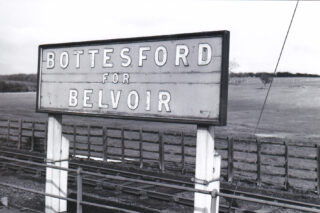
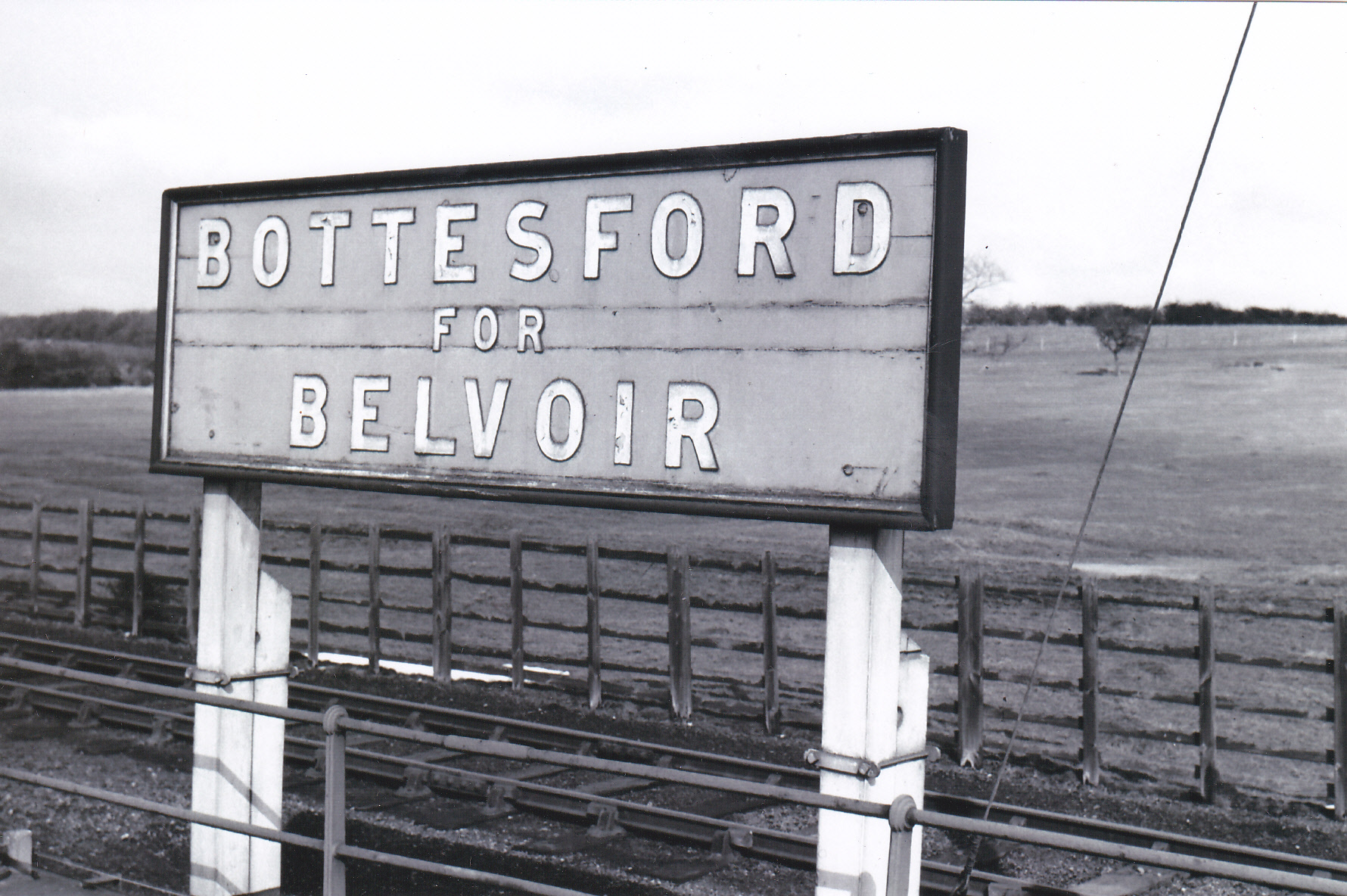
It appears that Bottesford station was re-named Bottesford for Belvoir for a time, perhaps to encourage interest, but just when this took place has been hard to determine. We would be grateful for any guidance on this. We were fortunate enough to obtain a copy of a postcard which shows a Bottesford for Belvoir signboard on the station platform, but this has no date attached to it. There is also a photograph taken in 1955 by R.J. Buckley, published in The Great Northern Railway in the East Midlands by Alfred Henshaw, in which a rather blurred station signboard seems to display “Bottesford for Belvoir”.. This is only a few years before Dr Beeching’s cuts, when the Nottingham-Grantham line was fortunate not to have closed.
“Footnotes”
The original route of the Ambergate Railway
Plans held in Nottingham Central Library show that the Ambergate line as originally designed would have run through Bottesford and Bingham, but at Radcliffe would have veered off the present course to run just south of the parish church at West Bridgford, in those days a rural hamlet surrounded by fields, to bridge the Trent at Clifton. It would then have joined the Midland line between Nottingham and Beeston, by means of spurs which would allow Ambergate trains to run eastwards into the Midland’s Nottingham station or to run westwards and then branch on to another Ambergate line which would have run via the Erewash valley through Hucknall and Codnor to reach Ambergate itself. You have to wonder if the Midland would really have agreed to this. The old maps also show the boundaries of the broad corridor of ground the company was going to acquire in order to build their railway, part of the vast estate of land which the railway companies acquired in the 19th Century.
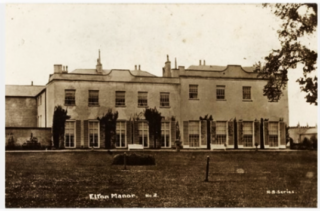
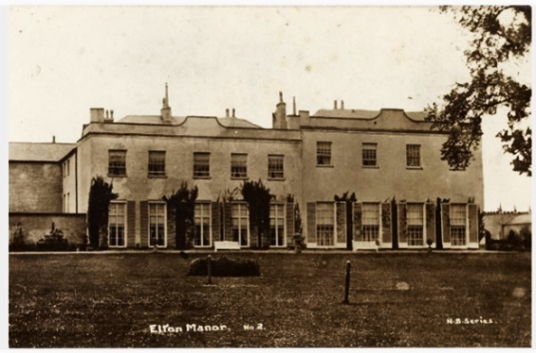
William Fletcher Norton Norton of Elton Manor
Wikipedia tells us that William Fletcher Norton Norton of Elton Manor was the illegitimate son of the second Lord Grantley (1742–1822). His first wife was Ursula Launder, co-heiress of Cornelius Launder of Elton Manor, in 1807. His second was Sarah Lushington, who was the lady presented with the silver shovel to “cut the first sod”. Fletcher Norton Norton was a director of the Company which owned the Grantham Canal and chairman of the Nottinghamshire and Derbyshire Fire & Life Assurance Company as well as Chairman of the Ambergate Railway.
Fletcher Norton Norton died November 15th 1865 aged 84 at Elton Manor. Sarah Norton died 15th January 1867 aged 82 at Elton Manor. They also owned property at Hastings and at 15 Mansfield Street, Portland Place, London. He left the manor and estate to a nephew known as the Count de Pully, said to be William Enguerrand de Pully, the eldest son of the Count de Pully of Belabre, France, and Mary, sister of William Fletcher Norton Norton. He sold Elton in 1901 to another Lord Grantley, who never lived at Elton Manor and is said to have failed to recognise it when he saw it from the train. He had sold it before the Great War, probably before 1913 and the house was demolished in 1933 by its last owner, W. Noël Parr, a Nottingham solicitor. Old photographs of the manor show that it was an unusual and attractive house built in the Regency Gothic style of architecture.
Villagers had a tradition that during the Civil Wars of the seventeenth century a battle was fought in the fields near Elton, and in confirmation of this report several weapons and human remains have been found. In 1780, a large number of silver coins principally of the reign of Henry II were discovered in the churchyard.
Kings Cross Station
A statue of George IV erected at Battle Bridge (at the northern end of the station site) in 1830 but demolished in 1842 is commemorated in the name Kings Cross. The terminus opened to passengers on 14th October 1852. The GNR had reached London in 1850 using a temporary station at Maiden Lane north of Kings Cross because of delay in purchasing the Kings Cross site which had been a smallpox and fever hospital.
Kings Cross is thought to have been the site of the battle in AD61 between Queen Boudicca and the Romans, and where the warrior queen subsequently was buried. Also, a church built in AD597 to house the relics of the martyr Saint Pancras stood where St Pancras Old Church is today, making the site one of the oldest places of Christian worship in Europe.
Colwick to Derby
The new GNR line to Colwick made it easier for them to encroach on the MR monopoly on coal traffic by building the line from Colwick via Gedling and Ilkeston to Derby and beyond, starting 1872. The increased traffic used new sorting yards and engine sheds developed at Colwick, though full development of these marshalling yards and railway station at Netherfield were not until later.
Current conversion rate
£10 in 1845 was equivalent to £1035.72 at current (May 2025) rates – Bank of England figures.
Time keeping
Railway signal telegraphy was developed in Britain from the 1840s onward. It was used to manage railway traffic and to prevent accidents as part of the railway signalling system. It’s not clear when the telegraph was installed on the Ambergate, perhaps not until 1855 when the GNR started working the line. The Midland Railway adopted London Time at all of its stations on 1 January 1846. As a consequence, in February 1846 the town council of Nottingham ordered that the town clocks be furnished with three hands, two indicating local time and the additional one the railway and post-office London time.
Sources
Coleman, Terry. The Railway Navvies. Penguin Books, 1968, ISBN 14 020903 4
Elton, Arthur. British Railways, Britain in Pictures, Collins, 1947.
Freeman, Michael. Railways and the Victorian Imagination. Yale University Press, New Haven and London, 1999, ISBN 9 780300 079708.
Henshaw, Alfred. The Great Northern Railway in the East Midlands: Nottingham – Grantham, Bottesford – Newark, Melton Mowbray, The Leicester Line and Ironstone Branches, RCTS (The Railway Correspondence and Travel Society), 2003, ISBN 090 1115 924.
Graves, H. Great Northern Locomotive History, Volume 1 1847-1866. RCTS (The Railway Correspondence and Travel Society), 1986, ISBN 0 901115 61 4.
Leluex, Robin. The East Midlands, Vol.IX in A Regional History of the Railways of Great Britain, 1976, ISBN 0 715371657 – this book provides a compact account of the history of the Nottingham-Grantham railway (pp.123-127).
Vic Mitchell & Keith Smith. Nottingham to Boston, 2015, Middleton Press, ISBN 978 1 908174 70 3 [Nottingham Central Library, Reference Section]
Tonks, Eric. The Ironstone Quarries of the Midlands, Part IX Leicestershire, 1992, Runpast Publishing, ISBN 1 870754 08 5.
Also: Wikipedia, TimetableWorld, the Nottingham Central Library Reference Collection, the National Library of Scotland Digital Maps Collection

No Comments
Add a comment about this page